Beyond Netaji: Tracing the Erased Legacy of Sarat Chandra Bose On His Birth Anniversary

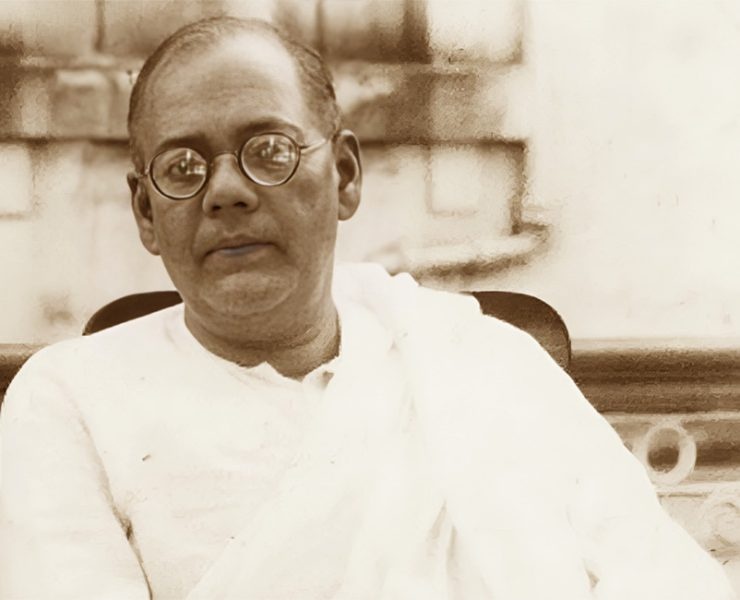
The Forgotten Bose: Who Was Sarat Chandra Bose? Sarat Chandra Bose (Sept 6, 1889 – Feb 20, 1950) was a towering figure in India’s independence struggle, elder brother of Netaji Subhas Chandra Bose, though his story remains largely understated. He was a barrister by profession, a seasoned nationalist, and a dedicated freedom fighter who played crucial roles both in court and in politics.
Family & Early Life Born in Kodalia, Bengal (now West Bengal), he was the fourth child of Janakinath Bose, a respected lawyer, and Prabhabati Devi. He belonged to a large family of 14 children, including Subhas Chandra Bose. This upbringing steeped him early in patriotism and public service.
- Education Sarat Chandra Bose completed BA and MA in English Literature from Presidency College, Calcutta (1909), followed by an LL.B from University of Calcutta (1910) .
- Then he got admission in Lincoln’s Inn (London), where he qualified as a barrister between 1912–191.
- He joined the Calcutta High Court chamber of Sir Nripendra Nath Sircar in 1914, quickly earning acclaim for his rigorous cross-examinations and courtroom command; it was said defendants sometimes fainted before him.
Overshadowed Legacy Despite comparable intellect and commitment, Sarat was overshadowed by Subhas Chandra Bose’s international fame and charismatic persona:
- Historian Leonard A. Gordon notes that Sarat’s achievements remain “largely uncelebrated,” partly due to tense relations with Congress leaders like Gandhi and Nehru.
- He never sought limelight, elected repeatedly to leadership seats, but always in his brother’s shadow.
- His devotion to secular nationalism and the United Bengal vision clashed with the mainstream Congress and communal politics, fueling historic marginalisation.
His Role as Barrister, Nationalist & Freedom Fighter
- Legal Career & Revolutionary Cases Sarat Chandra Bose prosecuted challenging political cases, defended Chittagong Armoury Raid revolutionaries, successfully commuting death sentences to life terms.
He criticised colonial justice, upheld rights of the accused, and used his courtroom prowess to defend press freedom .
- Congress Involvement & Political Leadership He joined Congress around 1918–1920, grounding the Swaraj and non-cooperation movements with C.R. Das and Gandhi.
He served as President of the Bengal Pradesh Congress Committee (1936), a member of All-India Congress Working Committee (1936–47), and leader of the Central Legislative Assembly post-1946.
- Financing & Imprisonment Bose gave up lucrative legal practice to support Congress and revolutionary groups, secretly funded the 1930 Civil Disobedience movements in Bengal; colonial records called him “most dangerous” and “a financier of revolutionaries.”
He served multiple times: three years in jail (1932), followed by interment (Kurseong), then December 1941 – September 1945 in Coonoor.
- Support for INA & Social Activism He strongly supported his brother’s Indian National Army and led efforts through the INA Defence and Relief Committee to secure legal representation and aid INA veterans.
- Advocacy Against Partition He departed the Congress Working Committee in Jan 1947 to protest Mountbatten Plan and partition, advocated a United Bengal and urged formation of a sovereign, secular province.
The Political Mind of Sarat Chandra Bose
Sarat was a deeply thoughtful leader whose vision blended socialism, anti-imperialism, secularism, and unity. He consistently advocated for separating religion from politics, believing that communal lines would fracture Indian national unity. International historian Leonard A. Gordon emphasised that Sarat “vehemently opposed the division of the country on the basis of religion,” and urged modern India to revisit his ideals of secular political engagement and communal harmony.
Unlike many of his Congress contemporaries, his lens was pan-national and socialist, he envisioned India not just as a sovereign state, but as a federation of autonomous socialist republics, where each region maintained its cultural identity while cooperating on shared welfare and governance.
Early Ideological Development
A distinguished barrister and member of the Swarajya Party in the 1920s, Sarat initially operated within India’s constitutional frameworks. He became a provincial legislature and later an Alderman in the Calcutta Corporation. His legal acumen allowed him to quietly foster early revolutionary and civil disobedience efforts, including supporting his brother Subhas and other freedom fighters.
Although aligned with Gandhi’s methods in the beginning, Sarat’s ethical convictions, rooted in Deshbandhu Chittaranjan Das’s maxim, “Nothing which is morally wrong is politically right,” led him to support morally driven, progressive activism and to oppose communal and imperial power plays.
Transition from Moderate to More Assertive Socialism
With time, Sarat’s ideological stance matured into a more assertive, socially conscious vision. His involvement in the 1930 Civil Disobedience Movement showed his pivot from legal advocacy to direct resistance; he voluntarily gave up his law practice and endured imprisonment from 1932 to 1935.
By 1947, he had resigned from Congress and established the Socialist Republican Party, later uniting various left factions into the United Socialist Organisation. His 1949 presidential address proposed an eight-point roadmap describing India as a “thoroughly modern socialist state” with scientific production, social ownership, and equitable cultural, religious, and linguistic rights.
This shift marked his movement away from moderate constitutionalism toward an assertive vision of democratic socialism, one grounded in principles of social justice and national reconstruction.
His Stand on Indian Independence, Socialism, and Bengal’s Partition
For Sarat Bose, Indian freedom was inseparable from egalitarianism: genuine national reconstruction meant rejecting colonial structures and communal separatism. He was a vocal critic of partition, considering it “suicidal to the cause of Indian independence and also the cause of social progress.”
Alongside Suhrawardy and Abul Hashim, he proposed the “United Bengal” plan, a sovereign, bi-communal state with proportional representation and joint leadership, endorsed by Gandhi and even supported by Jinnah at times.
Sarat’s vision of independence was deeply socialist, not merely political freedom but the social reconstruction of a unified, secular republic posed on socialist lines. He survived political isolation, resigned from the Congress Working Committee in protest over partition, and worked tirelessly toward a socialist model that valued pluralism, economic equity, and regional cooperation.
The Lawyer Who Fought for Freedom: His Legal Battles
From his call to the bar at Lincoln’s Inn in 1912 and enrollment in Calcutta High Court by 1914, Sarat Bose earned a sterling reputation as a barrister. He became renowned for his fierce cross-examinations, so formidable that witnesses occasionally collapsed under pressure. His oratory and analytical skills marked him as one of the leading advocates in Bengal’s High Court by the 1920s.
Despite ascending financially, earning enough to buy a holiday home in Kurseong, Bose directed significant portions of his earnings toward assisting political activists, students, and particularly his younger brother, Subhas Chandra Bose, who was rising as a prominent nationalist.
Major Political Trials He Defended Among the cases that define Bose’s legacy was his defence in the Chittagong Armoury Raid trial of 1931. Revolutionaries involved in the daring assault on British armouries in Chittagong faced the death penalty. Bose stepped in to defend them, arguing resolutely against capital punishment and helping reduce several death sentences to life imprisonment. He also lent legal aid in other high-profile trials arising out of the Civil Disobedience Movement of 1930, including those involving Congress activists detained under colonial laws.
Legal Support to Revolutionaries Like Subhas Chandra Bose and Others While publicly upholding non-violence, Bose covertly sympathised with revolutionaries. He used his legal skills and personal wealth to provide crucial support. Official colonial documents describe him as “a revolutionary, a financier of revolutionaries and a corrupter of the press.” Through his management of publications like Liberty, Banglar Katha, and Nabashakti, he openly lauded those convicted and vociferously criticised colonial policies.
He collaborated with the Indian National Army (INA) Defence Committee after WWII, joining other eminent lawyers, including Asaf Ali and Nehru, to legally defend INA officers tried at the Red Fort. Though less publicly recognised, his backing extended to both legal defence and financial assistance for revolutionaries and their families.
British Surveillance and How He Used the Law to Fight Colonial Injustice Because of his extensive nationalist activities and support for the INA and revolutionary elements, the British monitored Bose closely. Records indicate he was described in colonial intelligence as “a most dangerous opponent” whose influence extended well beyond typical Congress circles.
Detained again in December 1941 under Defence of India regulations, just before he was to take a ministerial post in Bengal, Bose spent over three years in internment (Seoni, Jabalpur, Kurseong, Coonoor), often in isolated colonial facilities to limit his political contact. During this detention, his legal acumen remained intact; he persistently challenged arbitrary detentions and insisted that no one should be imprisoned without trial.
After India’s independence, surveillance of his family continued well into the 1960s. Declassified documents from Bengal’s Intelligence Branch and Indian Intelligence Bureau showed systematic mail interception and trailing of his sons, even long after Sarat’s death in February 1950. His children expressed deep concern that freedom fighters and their kin were kept under watch without justification.
Bose used his legal expertise to contest these practices. He invoked principles of civil liberties and habeas corpus, challenging preventive detention laws and demanding legal recourse for those held without trial. His unwavering insistence on legal norms upheld fundamental rights even under colonial oppression.
Sarat vs. Nehru and Patel: The Bengal Partition Debate
In early 1947, Sarat Chandra Bose clashed with the Congress leadership, particularly Jawaharlal Nehru and Vallabhbhai Patel, over the Cabinet Mission Plan, which implicitly sanctioned dividing Bengal. He resigned from the Congress Working Committee on January 6, 1947, citing moral objections. Sarat argued that endorsing religious lines in the nation’s map broke with Congress traditions and would be condemned by future generations. He believed this path threatened India’s secular fabric, a warning he voiced strongly as he stepped away from the party’s inner circle.
His Open Opposition to the Partition of Bengal Sarat Bose was vocal and public in his opposition. Following his return to politics after WWII, he threw himself into campaigns against communal violence in Bengal and launched petitions, letters, and tours urging unity. By February 1947, he began a major campaign to oppose any attempt to slice up Bengal or India, urging Congress heavyweights to reconsider.
When the British prepared to roll out partition plans in June, he lamented to Patel that “future generations will… condemn us for conceding the division of India and supporting the partition of Bengal and the Punjab.”
Clash with the Congress High Command A turning point came in May–June 1947, when Bose jointly presented the “United Bengal” proposal to the Congress High Command. Nehru and Patel firmly rejected it, fearing it would weaken India’s unity and risk Bengal becoming effectively part of a Muslim-majority bloc.
Gandhi, initially sympathetic, eventually abandoned support under pressure from Nehru and Patel. On May 28, Gandhi wrote to Bose stating the two leaders were “very much opposed to it” .
Meanwhile, leaders like Syama Prasad Mukherjee rallied hard against the plan, organising mass Hindu rallies, especially in Calcutta, to demand a separate West Bengal. This grassroots sentiment, backed by Congress directives in the Assembly, ultimately carried the day.
His Demand for a United, Independent Bengal Sarat Bose’s vision was deeply secular and economically motivated. Collaborating closely with Huseyn Shaheed Suhrawardy, he crafted the “Sarat–Suhrawardy Pact” in May 1947, proposing an independent Bengal governed jointly by Hindus and Muslims. It envisioned a proportional legislature, shared administration, and communal harmony under a sovereign republic.
Despite initial support from leaders like Gandhi and even Jinnah, who reportedly said “What is the use of Bengal without Calcutta…” the plan fell apart. Key faults included opposition from Assam over port-access concerns, divergent views on electoral structures, and rising Hindu communal anxiety.
Bose and Suhrawardy’s joint scheme formally folded when neither Congress nor Muslim League endorsed it. On June 3, Mountbatten announced formal partition under Plan A, and Bengal was divided.
His Role in the Azad Hind Movement
During World War II, while Subhas Chandra Bose led the charge with the Azad Hind government and the INA, contrary to his more prominent brother, Sarat Chandra Bose served as a crucial anchor in Calcutta. He chaired the INA Defence and Relief Committee, tirelessly organising legal representation and welfare support for INA soldiers and their families. He coordinated fundraising efforts, letters of solidarity, and public campaigns that significantly shaped national sentiment. These initiatives weren’t simply political; they were a moral lifeline to those fighting abroad and a rallying cause for civilians at home.
Support to Subhas Chandra Bose and the INA
Sarat Chandra Bose was more than a supportive brother, he was an activist rooted in tangible action. He helped sustain the INA’s public image, liaising with lawyers (including Nehru and Asaf Ali) to defend INA officers during the infamous Red Fort trials. Those trials sparked nationwide unrest, and Sarat’s leadership within Congress’s relief efforts played an integral role in amplifying public solidarity. His participation showcased not only brotherly loyalty but also staunch ideological backing for the INA’s goals.
Surveillance by British Authorities
British and later Indian intelligence agencies maintained extensive surveillance on Sarat Chandra Bose. British CID and Intelligence Bureau agents tapped his home phone, intercepted thousands of letters, and compiled detailed files on his movements and contacts. These records reveal a consistent pattern of monitoring related to his activities on behalf of the INA and leadership within Bengal’s Congress.
Even after India became independent, monitoring didn’t cease. In 1949, intercepted messages suggested that Subhas Bose might have still been alive, a claim that reached Sarat himself. Those messages were part of continuing intelligence efforts well into the late 1940s.
Relationship with Subhas Chandra Bose Sarat Chandra Bose was not just Subhas’s elder brother, he was his mentor, financier, and closest confidant. Sarat financed Subhas’s formative years, including his education abroad, and supported his revolutionary path within the Indian National Congress. The two shared a profound familial and political bond: Subhas deeply respected Sarat’s counsel, and Sarat trusted his younger brother with unwavering faith.
How Sarat helped Netaji escape in 1941?
In late 1940, as Subhas Chandra Bose was placed under strict house arrest at their Elgin Road home in Calcutta, the brothers began shaping his covert departure plan. Sarat took key steps: recruiting allies like Mian Akbar Shah from the North-West Frontier, and tapping his network to procure disguise and safe passages . He leveraged his influence and resources to keep the operation under the radar of British surveillance.
- On the night of 16–17 January 1941, Subhas initiated his escape. He locked himself in a room and avoided the British guards and watchers. Sarat’s family, most notably Bivabati Bose, Subhas’s sister-in-law, created a cover of normal activity: meals were consistently delivered, household sounds maintained, and British watchers deceived into thinking Subhas was still inside. Sarat’s involvement ensured the house remained a facade of normalcy even as the exit was underway.
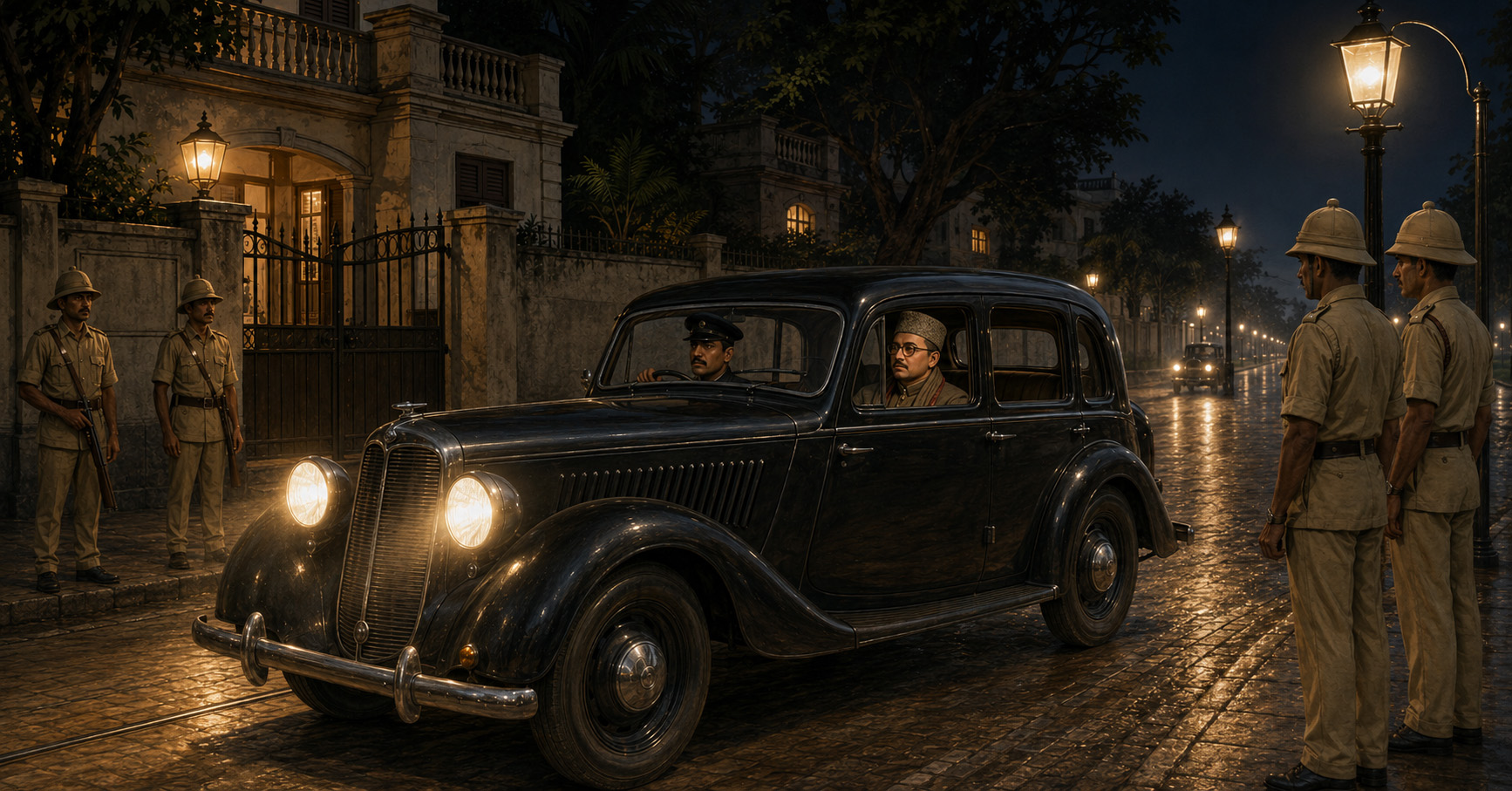
- At precisely the designated hour, Sarat’s son, Sisir Kumar Bose, drove Subhas in Sarat’s less conspicuous Wanderer car from Elgin Road to the Gomoh railway station (now named Netaji Subhas Chandra Bose Gomoh Station) in Bihar. Sarat’s role in choosing the nondescript car, ensuring its readiness, and approving the route was vital, his strategic caution allowed the duo to slip out without alerting the police. From Gomoh, Subhas boarded a train to Delhi and proceeded stealthily to Peshawar. Sarat had arranged for Mian Akbar Shah to guide him further through tribal regions to Kabul. Sarat’s coordination extended to using intelligence channels and couriers, guaranteeing Subhas remained hidden during critical stages of the journey across the frontier.
- While Subhas ventured into Europe, Sarat bore the consequences. British security immediately suspected family involvement. On 26 January 1941, just a day after Subhas’s safe passage into Afghanistan, Sarat was arrested by the British, signifying their belief in his central role. He endured severe imprisonment, which lasted until 1945, while Subhas was establishing the Azad Hind movement abroad.
The Shadowed Legacy: Why We Don’t Talk About Sarat Chandra Bose Today?
Sarat Chandra Bose made extraordinary contributions during and after India’s struggle for independence. Yet, despite his tireless legal and political work and his vision for a united Bengal, his legacy has largely faded from the national discourse. Numerous historians note that he was often “overshadowed by his own younger brother (Subhas)… and neglected by history.” The dominant narrative around Subhas, the charismatic leader of the INA, meant that Sarat’s achievements, though significant, were subsumed in the larger-than-life legend of “Netaji.” His principled stance against partition and advocacy for religious harmony found little resonance in a newly formed nation more focused on celebrating a simpler heroic tale.
Congress’s Sidelining of Sarat Chandra Bose After 1947 In the months leading to independence, Sarat was a major figure: elected leader of the Congress in the Central Legislative Assembly, a member of the interim government, and part of the Working Committee. However, his repeated refusals to align with Congress’s evolving political agenda, particularly his resistance to partition, ultimately placed him outside its mainstream. In January 1947 he resigned from the Working Committee and fully exited Congress by August 1, 1947, when he also founded the Socialist Republican Party. As the Congress consolidated power under Nehru and Patel, members like Sarat who opposed their vision were nudged to the margins. His critique of “dominion status under British influence” and published attacks on government practices further alienated him from the Congress polity.
Loss of Relevance Post-Partition After 1947, Sarat’s political influence declined sharply. Though he launched the Socialist Republican Party, founded The Nation newspaper, won a by-election in 1949, and co-founded the United Socialist Organisation, these efforts struggled to gain traction in a political landscape dominated by a strong central Congress. By contrast, his brother Subhas retained a powerful emotional hold on public memory through the INA’s dramatic trials and wartime sacrifices. Sarat, despite being remembered as “No 1 political opponent of Prime Minister Jawaharlal Nehru” at the time of his death, simply lacked the mass appeal and mythic symbolism that his brother carried. His position as a regional, non-Congress leftist meant he had little access to the levers of power in post-independence India.
Comparison with Netaji’s Glorified Image Sarat’s struggle against partition, his legal prowess, and his drive for communal harmony have not matched the emotional narrative built around Subhas. Netaji’s image as the fearless leader of the INA, complete with dramatic escapes and international campaigns, provided the heroic arc that later generations found easier to engage with. Media attention, political rhetoric, and popular memory have overwhelmingly fixated on Subhas’s legend, his bravery, martyrdom, and vision for India’s destiny, while Sarat’s intellectual, principled, and institutional work remains in the shadows.
British Files on Sarat Chandra Bose: What the Declassified Documents Revealed?
British Intelligence Surveillance on Sarat Chandra Bose From the late 1930s onward, British authorities were meticulously tracking the activities of Sarat Chandra Bose as a result of his deep involvement with the Indian National Army (INA) movement and his advocacy for a united Bengal. According to declassified files from the West Bengal Intelligence Branch, surveillance began early and was persistent. A file dated September 1949 reveals that postal interception was officially sanctioned under the Post Office Act, targeting letters addressed to Sarat’s residence at 38/2 Elgin Road, a site closely associated with Netaji’s family.
British CID records, especially from officers such as Charles Tegart, referred to Sarat as “the power behind Subhas Chandra Bose” and warned that his politically active stance, though less flamboyant than his brother’s, was potentially more insidious. Their files noted his growing influence in political circles and specifically highlighted his strong performance in the South Calcutta by-election, seen by authorities as a serious political threat.
His Name in Secret Files: MI5 and Indian Police Records The British weren’t alone in their scrutiny. During World War II, the MI5 (the UK’s domestic counter-intelligence service) maintained a liaison with India’s intelligence apparatus. In October 1947, an Indian Intelligence Bureau (IB) officer forwarded intercepted correspondence from Sarat’s nephew, Amiya Nath Bose, to MI5 in New Delhi. This indicates not just local surveillance, but the sharing of intelligence with Britain’s internal security services.
Furthermore, the IB kept exhaustive files not only on Sarat but also on his brothers and children. Intercepted personal letters—including those between Subhas Bose’s wife Emilie Schenkl and Sarat’s son Sisir—were routinely opened, copied, and analysed. Evidence suggests some were duplicated before onward delivery.
Efforts to Suppress His Activities and Communications These surveillance efforts were more than passive monitoring. They actively targeted Sarat’s political communications and alliances. The British and later Indian Intelligence Branch employed post-office interception, covert surveillance of political gatherings, and maintenance of detailed dossiers. According to declassified documents, 14 IB officers were assigned specifically to monitor Amiya Nath Bose alone, signaling high-level concern over Sarat’s broader influence.
Internal memos from the period show that tracking continued into the late 1960s, even long after Sarat Bose’s passing in 1950. Reports covered every nuance of family movements, correspondence, and international outreach. This unwavering and long-term focus illustrates a clear intent to control and suppress nationalist networks that were perceived as outside mainstream Congress lines.
Legacy and Recognition: How India Remembered Sarat Chandra Bose?
Sarat Chandra Bose’s contributions, though historically overshadowed, have gradually received acknowledgment through scholarly remembrance, institutional dedications, and cultural preservation. Over the decades, his larger legacy intertwined with that of Subhas Bose has remained visible, albeit under‑celebrated in mainstream narratives. Scholars highlight his role in founding Netaji Bhavan and Sarat Bose Academy, serving as crucial nodes for research and public engagement.
Memorials, Awards, or Institutions in His Name One of the most respected tributes to Sarat Chandra Bose is a statue installed beside the Calcutta High Court, symbolizing his stature not just as Subhas Bose’s brother, but as a distinguished freedom fighter and lawyer. In January 2014, the Sarat Chandra Bose Memorial Lecture was inaugurated—the first address delivered by historian Leonard A. Gordon, co-author of a seminal biography of the Bose brothers. This initiative continues to draw intellectual attention to his contributions to India’s constitutional and socio-political discourse.
Though not directly bearing his name, the Netaji Bhavan (founded in 1946 by Sarat Chandra Bose at their family home) now functions as a museum and research center, also supporting the Sarat Bose Academy established in 1952. This academy serves as a platform for historians, lawyers, journalists, and the public to study the Bose legacy and foster cultural exchange. These institutions reflect his efforts to blend remembrance with active public engagement following Independence.
.png)