Chhath Puja: The Festival of Sun Worship That Ushers in Prosperity and Elevates the Economy

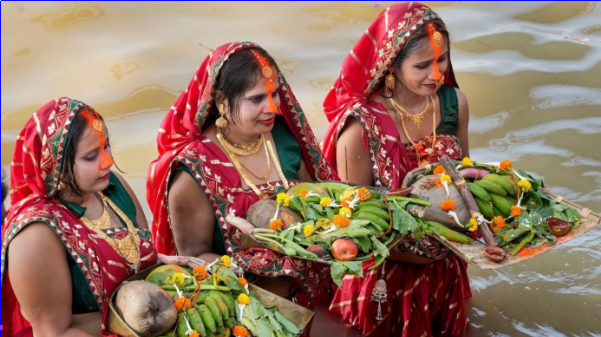
From October 26 to 29, 2025, Chhath Puja will be celebrated with vibrant enthusiasm across India and throughout the world. This four-day festival, which begins six days after Diwali during the Kartik month, is devoted to Surya Dev, the Sun God, and Chhathi Maiya. Its special significance is felt not only in Eastern Uttar Pradesh, Bihar, Jharkhand, and neighboring Nepal, but—thanks to the Indian diaspora—its traditions now resonate globally as well. Chhath is not merely a spiritual or cultural festivity; it is a gateway through faith to new avenues of prosperity.
Last year, in 2024, Chhath Puja generated business worth ₹12,000 crore, providing livelihoods to lakhs of merchants, artisans, and workers. The demand for bamboo baskets, fruits, sweets, and ceremonial attire infused fresh vitality into local economies. In this article, we’ll explore both the economic impact and the cultural significance of Chhath Puja.
1. A ₹12,000 Crore Economic Surge in 2024
Chhath Puja stands as one of the most economically influential festivals in India. Last year, in 2024, this festival generated an estimated ₹12,000 crore in commerce across the nation. Nearly 150 million people took part over the four days, with the Bihari and Purvanchal communities playing a pivotal role. The pattern of purchases during the celebrations brought direct benefits to small businesses, local shopkeepers, and artisans. The festival is a stellar example of initiatives like “Vocal for Local” and “Atmanirbhar Bharat,” with bustling markets in Bihar, Jharkhand, and Uttar Pradesh filled with eager families shopping for ceremonial goods, clothes, and sweets.
2. Boosting Agriculture, Textiles, and Cottage Industries
Preparations for Chhath Puja invigorate agriculture, textile manufacturing, and home-based industries. There is a remarkable surge in demand for essential items—bamboo baskets, banana leaves, sugarcane, fruits (such as coconut, apple, and banana), vegetables, and the traditional sweet Thekua. For local farmers and traders, this is a golden opportunity. Meanwhile, the craving for traditional attire also infuses life into the marketplace. Women choose sarees, lehenga-chunni, and salwar-kurtas, while men opt for kurta-pajamas and dhotis. These trends lend economic strength to local craftsmen and small-scale industries, sustaining livelihoods and community pride.
During Chhath Puja, Bihar and neighbouring states witness a great homecoming as migrant workers return to their villages. These individuals bring earnings from far-off places, giving the local economy a powerful if temporary boost. Retail, transport, and hospitality sectors experience a surge in activity. The rising demand for trains, buses, and taxis leads to higher incomes in transportation. Villages and towns see a flourish of pop-up shops, stalls, and small businesses, providing employment to thousands.
3. Encouraging Tourism and Local Trade
The festive riverbank ghats and elaborate decorations further enliven local commerce during Chhath Puja. In Patna, the capital of Bihar, millions gather along the Ganges, while Delhi’s Yamuna riverbank welcomes similar crowds—resulting in windfall gains for local vendors, food stalls, and service providers. The festival sparks economic activity and fuels cultural tourism as well.
Also Read: Diwali Across Bharat: 36 Celebrations That Illuminate a Nation’s Soul
4. Chhath Puja Proposed for UNESCO Intangible Cultural Heritage List
On August 8, 2025, India officially proposed Chhath Puja for inscription on UNESCO’s Intangible Cultural Heritage list. The aim is to bring wider attention to this festival, protect its eco-friendly rituals, and promote sustainability worldwide. In collaboration with the Sangeet Natak Akademi, IGNCA, and cultural bodies from the UAE, Suriname, and the Netherlands, India prepared a multinational nomination to honor Chhath’s tradition.
5. Cultural and Spiritual Significance of Chhath Puja
The roots of Chhath stretch back to Vedic times. In the Rigveda, the Sun God is praised as the giver of light and life. Draupadi performed the Chhath rituals under Sage Dhaumya’s guidance in the Mahabharata, while Mother Sita invoked the Sun after returning to Ayodhya in the Ramayana. Lord Surya’s son, Karna, began the tradition of offering an arghya to the Sun—a symbol of devotion.
6. Worship of the Sun and Chhathi Maiya
Chhath Puja centres on worship of the Sun and Chhathi Maiya, revered as the protector and benefactor of children. No idols or priests officiate, making the rituals intimately connected with nature.
7. Why Worship the Setting Sun?
Chhath Puja is distinct in its reverence for the setting sun—the first arghya is offered at dusk. This practice expresses gratitude for the day and acknowledges the balance between light and darkness.
8. The Four-Day Ritual Cycle
Chhath Puja unfolds over four days:
Nahay Khay: Devotees bathe and partake of purified food.
Kharna: The second day is marked by fasting, followed by a prasad of jaggery rice pudding and bread in the evening.
Sandhya Arghya: On the third evening, the first offering is made to the setting sun.
Usha Arghya: On the final morning, devotees greet the rising sun with offerings that break the fast.
Many—especially women—undertake a rigorous 36-hour fast without water, standing in rivers to present bamboo baskets filled with fruit, thekua (festival sweets), and sugarcane. These acts express gratitude for harvest blessings and prayers for family well-being.
9. Chhath Puja Worldwide
Today, Chhath Puja is celebrated across continents, wherever the Bihari and Purvanchal diaspora has settled. From the USA, UK, Australia, Mauritius, Canada, UAE, Singapore, Japan, and Sri Lanka, devotees gather at riversides in cities like New Jersey, San Francisco, London, and Sydney. This global festival embodies the unity of Indian culture and highlights the economic contributions of the diaspora, who carry both wealth and tradition to their new homelands.
Chhath Puja is a sublime convergence of nature, faith, and social unity. It stands as a symbol of spiritual and cultural prosperity—and economic progress. ₹12,000 crore in business, a flourishing local industry, and employment generation make it a bedrock for a self-reliant India. UNESCO recognition will elevate this festival on the global stage.
.png)