From Ganpati Idols To Microchips: India’s Swadeshi Revolution Gains Momentum

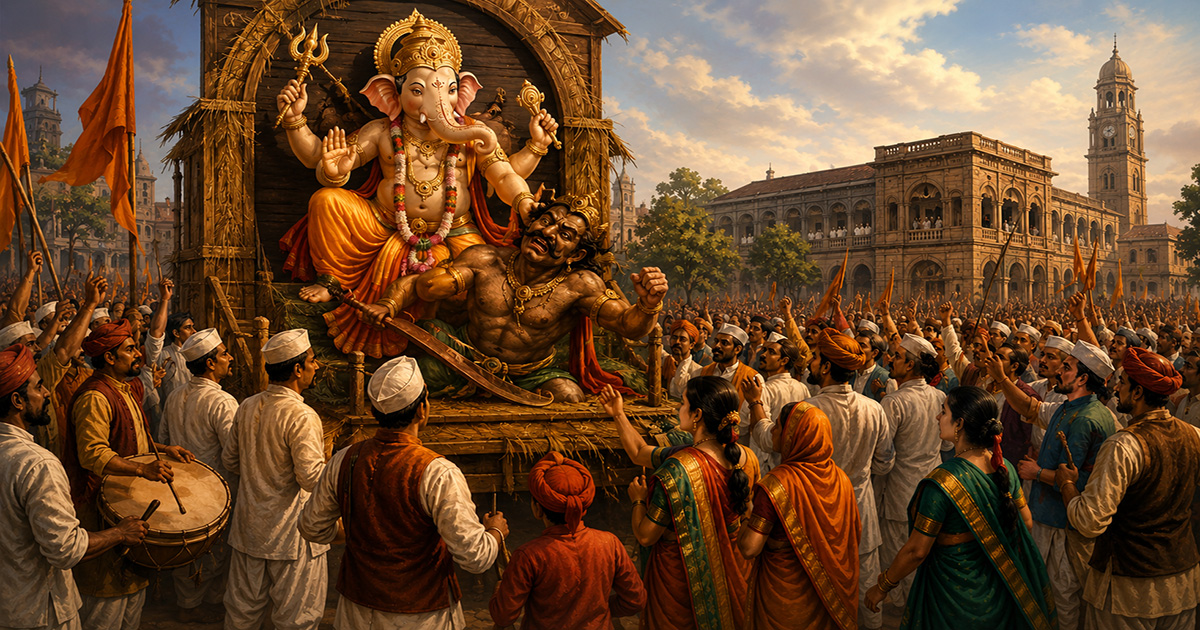
On May 25, 2025, during a public address in Dahod, Gujarat, Prime Minister Narendra Modi reiterated his call for embracing Swadeshi, urging citizens to prioritize Indian-made products over imports. Expressing concern over the continued use of foreign goods, especially during cultural and religious occasions, he remarked, “Some still bring home Ganpati Bappa with chhoti aankh made abroad (China), instead of idols crafted in India.” His statement underscored the symbolic and practical importance of self-reliance in preserving India’s cultural identity and supporting domestic artisans.
This appeal is part of a broader national sentiment observed over the past decade, wherein several Indian political leaders have actively championed the cause of Swadeshi. From 2017 to 2025, at least ten prominent leaders across various parties have advocated for the promotion and use of indigenous products through speeches, policy initiatives, and public campaigns. Their messages reflect a growing emphasis on economic nationalism, self-sufficiency, and the revival of local industries as vital components of India’s development strategy.
This trend marks a significant cultural and economic shift towards building an Aatmanirbhar Bharat (self-reliant India), reinforcing the importance of internal strength in global competitiveness and national pride.
Make in India, Worship in India”: PM Modi Urges Swadeshi Ganpati Idols Over Imports
On May 26, 2025, during the inauguration of development projects worth ₹24,000 crore in Dahod, Gujarat, Prime Minister Narendra Modi made a strong appeal for the promotion of Swadeshi (indigenous) products. Emphasizing the need to support Indian-made goods, especially during festivals, he voiced concern over the continued use of imported items. In particular, he noted that during Ganesh Chaturthi, people often bring home idols of Ganpati Bappa with “small eyes” made abroad, rather than opting for those lovingly crafted by Indian artisans.
This statement came in the broader context of heightened geopolitical tensions, following Operation Sindoor—a recent Indian military offensive targeting terror infrastructure in Pakistan. With China’s support for Pakistan drawing scrutiny, Modi’s remarks were seen as a call for economic nationalism, urging citizens to reinforce self-reliance and national pride by choosing local products over foreign imports.
Dr. Mohan Bhagwat Champions ‘Panch Parivartan’ as Blueprint for Nation’s Transformation
On February 23, 2025, during a Karyakarta gathering in Nagpur, Maharashtra, Rashtriya Swayamsevak Sangh (RSS) Sarsanghchalak Dr. Mohan Bhagwat emphasized the importance of embracing “Panch Parivartan”—a framework of five key transformations aimed at fostering comprehensive societal development. In his address, Dr. Bhagwat highlighted the pillars of this vision: social harmony, family values, environmental conservation, Swadeshi (indigenous) practices, and civic responsibility. He asserted that these interconnected values form the foundation of a strong and self-reliant nation, urging citizens to adopt them in daily life to ensure sustained progress and national unity.
Amit Shah Rallies Nation for ‘Aatmanirbhar Bharat’ Through United Effort
On October 2, 2021, while addressing a gathering in Mumbai, Maharashtra, Union Home Minister Amit Shah called upon every citizen to actively contribute to building a self-reliant India. Emphasizing the power of collective effort, he stated, “If each one of the 130 crore citizens takes a pledge to take the country forward and work for its development, we can make India ‘Aatmanirbhar’ and position it as a powerful nation.” Shah further reinforced this vision in 2022, noting that contemporary initiatives like ‘Aatmanirbharta’ and ‘Vocal for Local’ are modern embodiments of Mahatma Gandhi’s Swadeshi movement, thus grounding today’s self-reliance campaign in the legacy of India’s freedom struggle.
Yogi Adityanath Backs ‘Vocal for Local’ to Empower Indian Artisans and Revive Swadeshi Spirit
While inaugurating the 24th ‘Hunar Haat’ at Avadh Shilpgram in Lucknow, Uttar Pradesh, Chief Minister Yogi Adityanath underscored the vital role of the Swadeshi movement in empowering Indian artisans on January 23, 2021. He emphasized that promoting indigenous craftsmanship through initiatives like ‘Vocal for Local’ not only uplifts local talent but also contributes significantly to the nation’s journey toward self-reliance. “Swadeshi will help empower the craftsmen, and when the craftsmen progress, the country will become self-reliant,” he stated. The event, organized by the Ministry of Minority Affairs, ran from January 22 to February 4, 2021, and celebrated traditional skills under the banner of economic and cultural revival.
End Imports, Boost Exports”: Nitin Gadkari Champions Swadeshi for Economic Growth
In a virtual event organized by the Swadeshi Jagran Manch in Delhi, Union Minister Nitin Gadkari strongly advocated for the promotion of Swadeshi (indigenous) production on October 18, 2020. He emphasized the urgent need to phase out imports and significantly boost exports by encouraging the manufacture of import-substitute goods. Gadkari stated, “I feel imports need to end and exports should be increased through the promotion of import-substitute goods.” The event also honored companies that refrained from laying off workers during the COVID-19 lockdown, highlighting a collective commitment to economic resilience and self-reliance.
Ravi Shankar Prasad Launches Swadeshi Microprocessor Challenge to Propel India’s Tech Self-Reliance
Union Minister of Electronics and Information Technology, Ravi Shankar Prasad, launched the Swadeshi Microprocessor Challenge with the theme “Innovate Solutions for Aatmanirbhar Bharat” on August 18, 2020. He highlighted that this initiative marks a significant stride toward achieving technological self-reliance for India. Prasad emphasized that fostering indigenous innovation in microprocessor technology is crucial for reducing dependence on foreign hardware and strengthening the nation’s position in the global technology landscape.
Defence Ministry Takes Bold Step Toward Self-Reliance by Banning 101 Imported Items
Defence Minister Rajnath Singh announced a significant policy shift aimed at enhancing India’s self-reliance in defense production by banning the import of 101 defense items in August 2020. This decisive move is expected to channel contracts worth nearly ₹4 lakh crore to domestic industries over the next six to seven years. The banned items list includes a wide range of equipment, from basic components to sophisticated high-technology weapon systems such as artillery guns, assault rifles, corvettes, sonar systems, transport aircraft, Light Combat Helicopters (LCHs), radars, and more, all intended to meet the operational requirements of India’s defense forces. This initiative underscores the government’s commitment to boosting indigenous manufacturing capabilities and reducing dependency on foreign imports in the strategic defense sector.
Nirmala Sitharaman Encourages Citizens to Choose Domestic Ganesha Idols This Festive Season
Finance Minister Nirmala Sitharaman on June 25, 2020 in New Delhi emphasized that Atmanirbhar Bharat is not about isolationism or protectionism but a strategic vision to establish India as a global manufacturing hub. She urged citizens to support this goal by avoiding non-essential imports, specifically highlighting the need to refrain from purchasing Ganesha idols from China. Sitharaman stressed that true self-reliance involves promoting locally made household products such as soapboxes, plastic items, and incense sticks, which collectively contribute to strengthening India’s economy and manufacturing ecosystem.
PM Modi’s Vision for Self-Reliance: Paving a New Path to India’s Progress
Prime Minister Narendra Modi underscored the critical importance of self-reliance on May 1, 2020 in Vadnagar, Gujarat stating that the current global circumstances have shown that a “Self-reliant India” is the only sustainable path forward. In response to the challenges posed by the COVID-19 pandemic, he launched the Atmanirbhar Bharat campaign, unveiling a comprehensive economic stimulus package worth ₹29.87 trillion. This initiative aims to transform the crisis into an opportunity, fostering resilience and self-sufficiency across India’s economy and industries.
Bhaiya Ji Joshi Calls on Indians to Embrace Swadeshi to Resist Chinese Economic Influence
During the main event in Delhi on August 15, 2017 at Rustamji Armed Police Training College, Suresh Bhaiyyaji Joshi, General Secretary of the RSS, emphasized the importance of adopting the Swadeshi ethos to counter China’s increasing efforts to dominate the Indian market. He called for a boycott of Chinese goods, stressing that while India’s vigilant armed forces safeguard the borders, it is the responsibility of the people to protect the nation from economic subjugation by preventing the entry of Chinese products into Indian markets. Joshi urged citizens to internalize and practice the principles of self-reliance and indigenous consumption to ensure India’s economic sovereignty.

.png)