How Netaji's Elder Brother Sarat Chandra Bose Planned His Great Escape Amid Tight British Scrutiny?
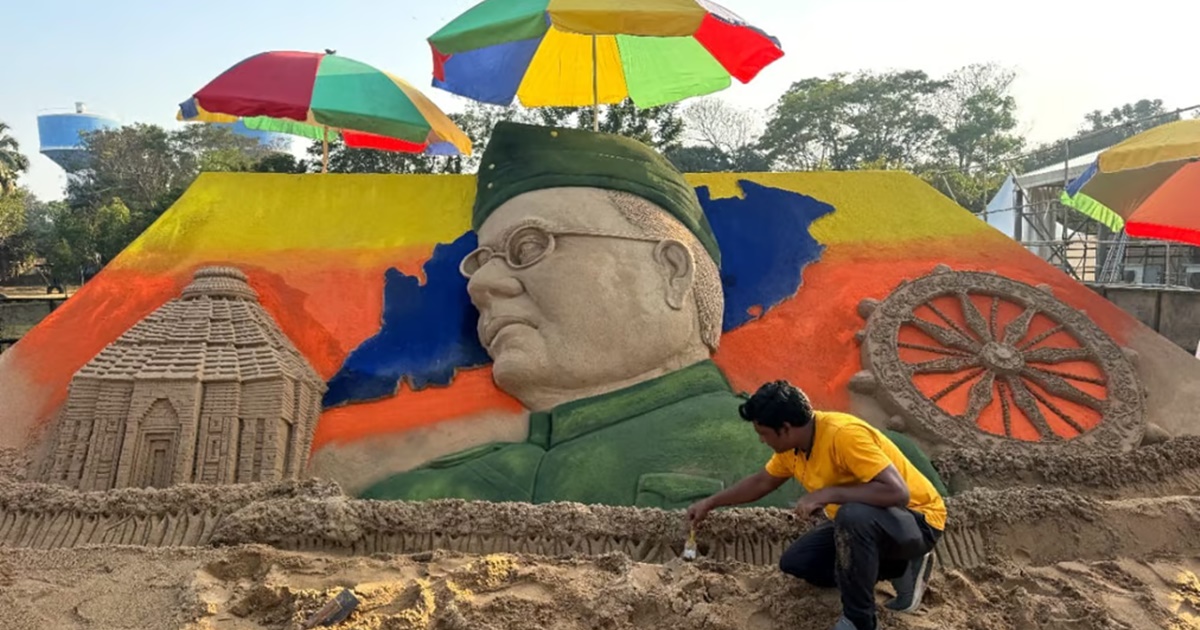
The script for Netaji's Great Escape was not written by a military officer, but by his elder brother, Sarat Chandra Bose.

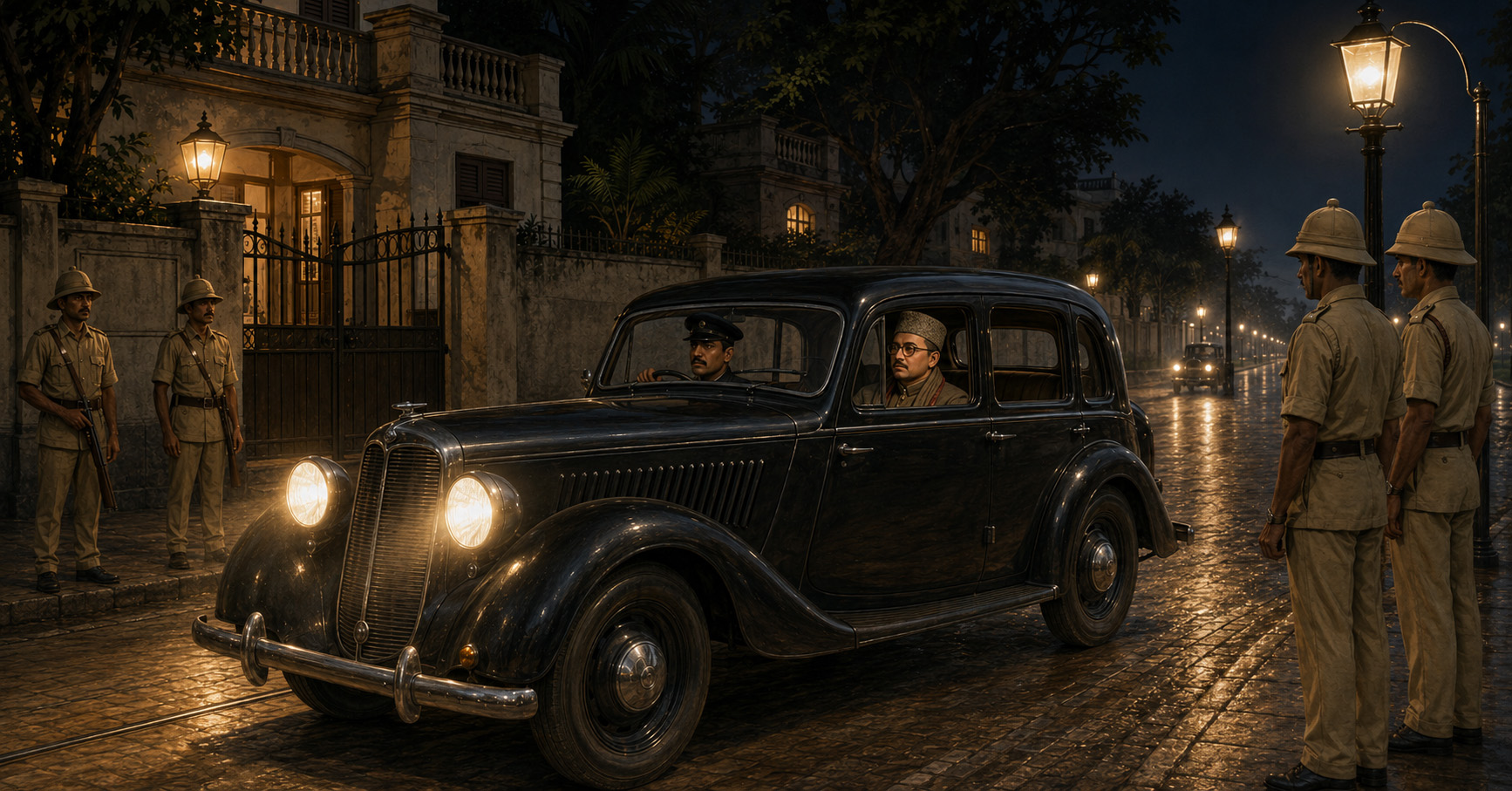
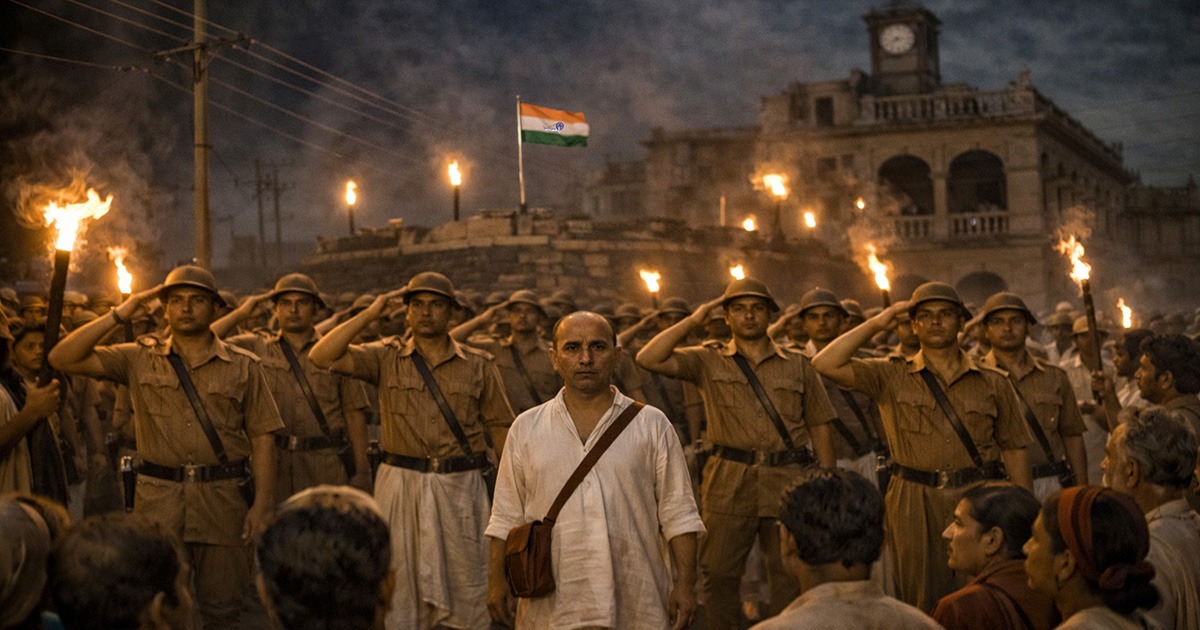
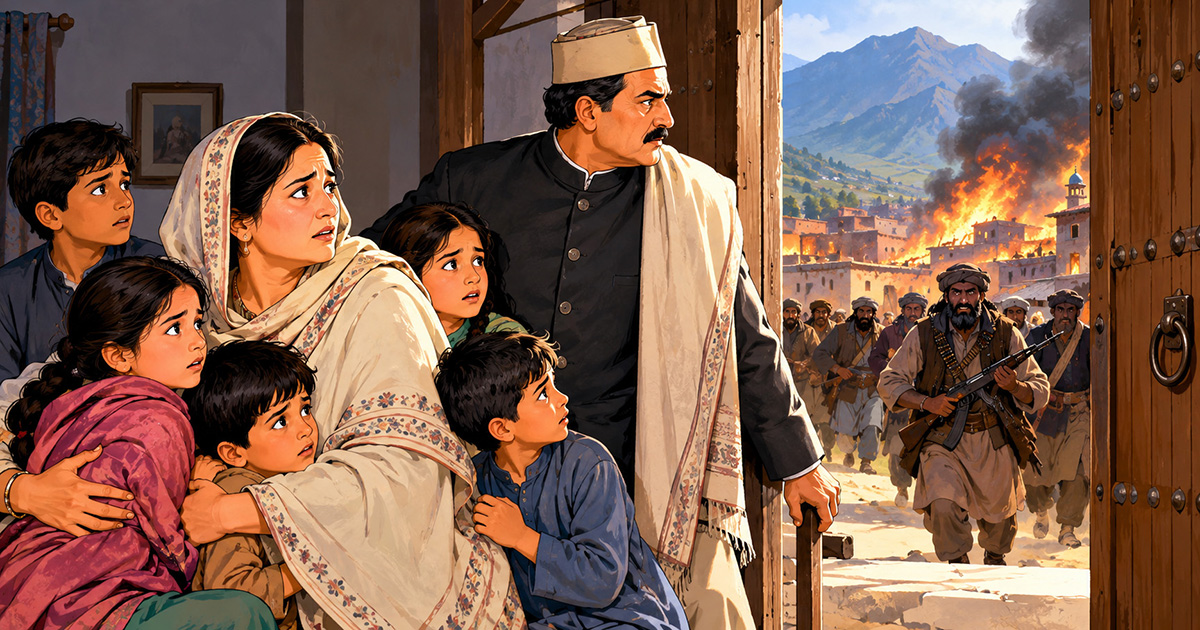
Netaji Subhash Chandra Bose's great escape as planned by his brother Sarat Chandra Bose | This image is AI-generated
On the midnight of January 16, 1941, British policemen stood on guard outside Netaji Subhas Chandra Bose's residence on Elgin Road in Calcutta (now Kolkata). They were convinced that the man under the strictest surveillance of the British Government could not possibly escape from that house. Inside the house, everything also appeared perfectly normal. The lights in the room were on, fruits were being placed for his meal, and it seemed as though Subhas Chandra Bose was still inside his room. But the reality was entirely different. At that very moment, a car parked just a short distance from the house was ready to change the course of history. Netaji boarded that car and slipped away right before the eyes of the British. Yet they did not suspect a thing. The script for Netaji's Great Escape was not written by a military officer, but by his elder brother, Sarat Chandra Bose. Through months of meticulous planning and a carefully crafted strategy, Sarat Chandra Bose outwitted the entire British intelligence apparatus.
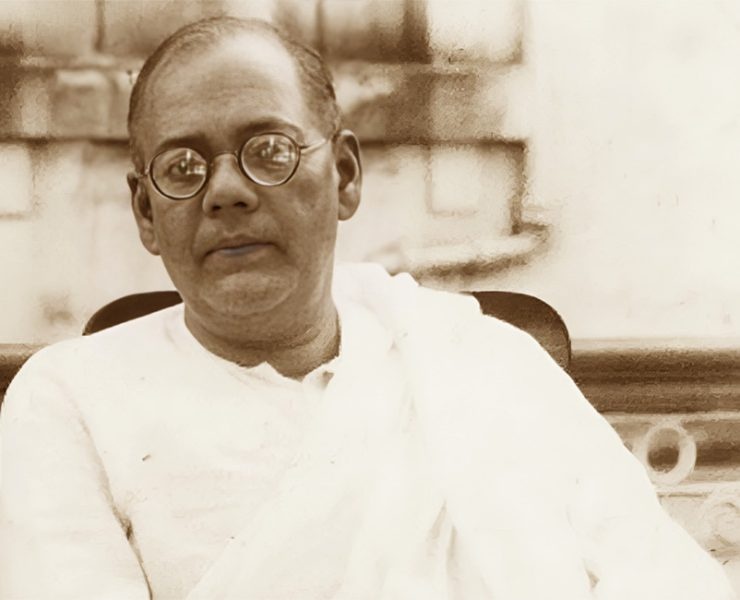
On July 2, 1940, the British Government arrested Netaji Subhas Chandra Bose on charges of sedition. In protest against his arrest, he began a hunger strike in prison. Alarmed by his deteriorating condition, John Herbert, the Governor of Bengal, ordered that he be placed under house arrest at his own residence. During his confinement, Netaji began planning his escape from India. However, this seemed impossible because of the strict British police surveillance around his house. Sarat Chandra Bose, who was born on September 6, 1889, and was eight years older than Netaji, took upon himself the responsibility of planning his younger brother's escape abroad.
Sarat Chandra Bose's first decision was that Subhas Chandra Bose's departure from the house should not resemble a secret operation. Instead, everything had to appear like an ordinary daily routine so that no one would suspect anything unusual. As part of this plan, he instructed his son, Sisir Kumar Bose, to visit Netaji's house every night for nearly two and a half months. Whenever the policemen stopped him, Sisir would explain that his uncle, Netaji Subhas Chandra Bose, wished to listen to radio broadcasts about the Second World War but was too unwell to operate the radio himself. Gradually, this became a routine occurrence, and the police completely lost their suspicion.
Meanwhile, Sarat Chandra Bose also made elaborate preparations for Netaji's disguise. Loose Pathani salwars, a fez cap, suitcases, briefcases, Cartswool shirts, toiletries, a pillow, and a blanket were purchased from the Vachel Molla Department Store in central Calcutta. Following Sarat Chandra Bose's strategy, his son Sisir Kumar Bose also had visiting cards printed in the name of: "Mohammad Ziauddin, B.A., LL.B., Travelling Inspector, The Empire of India Assurance Company Limited, Civil Lines, Jubbulpore." This new identity would become Netaji's greatest protection throughout his journey.
Finally, on the night of January 16, 1941, the moment for which preparations had been underway for months had arrived. At around 1:35 a.m., Subhas Chandra Bose put on the Pathan disguise of Mohammad Ziauddin. He wore the gold-rimmed spectacles that he had abandoned nearly a decade earlier and put on sturdy leather lace-up shoes for the long journey ahead. Even after Netaji had left the house, Sarat Chandra Bose kept the lights in his room burning so that the British policemen outside would continue believing he was still inside.
Days passed after Netaji had already escaped, yet Sarat Chandra Bose continued placing fresh fruits in his room every day and even had the toilet flushed regularly, ensuring that the British police remained convinced that Netaji was still living inside the house. Sarat Chandra Bose's plan succeeded. Netaji safely reached Afghanistan. But Sarat Chandra Bose did not stop there.
He established contact with Ota, the Chancellor of the Japanese Consulate in Calcutta, so that Netaji could receive assistance from Japan. Eight months after Netaji's great escape, Sarat Chandra Bose wrote to Chancellor Ota seeking Japanese support to strengthen the Indian National Army (Azad Hind Fauj). In this way, while remaining in India, he established contacts with the Japanese government and played a significant role in helping Netaji build the Indian National Army.
By this time, the British government had begun to realise the importance of Sarat Chandra Bose's activities. It concluded that he was the principal architect behind Netaji's dramatic escape. Charles Tegart, head of Bengal's intelligence system, described Sarat Chandra Bose in his reports as the real force behind Subhas Chandra Bose and labelled him an extremely dangerous man for British rule. As a result, on April 15, 1942, Sarat Chandra Bose was imprisoned. He spent the next four years in harsh confinement, during which his health steadily deteriorated.
The story of Netaji Subhas Chandra Bose's great escape is usually remembered for Netaji's extraordinary courage. However, it was Sarat Chandra Bose who laid the foundation for this historic operation. It was he who devised the strategy to mislead the police, arranged Netaji's false identity, organised his disguise, planned every detail of his safe journey, and even after Netaji reached foreign soil, established contacts with Japan to give fresh momentum to India's freedom struggle.