Madan Lal Dhingra: The Revolutionary Who Sparked India’s Freedom Struggle Abroad

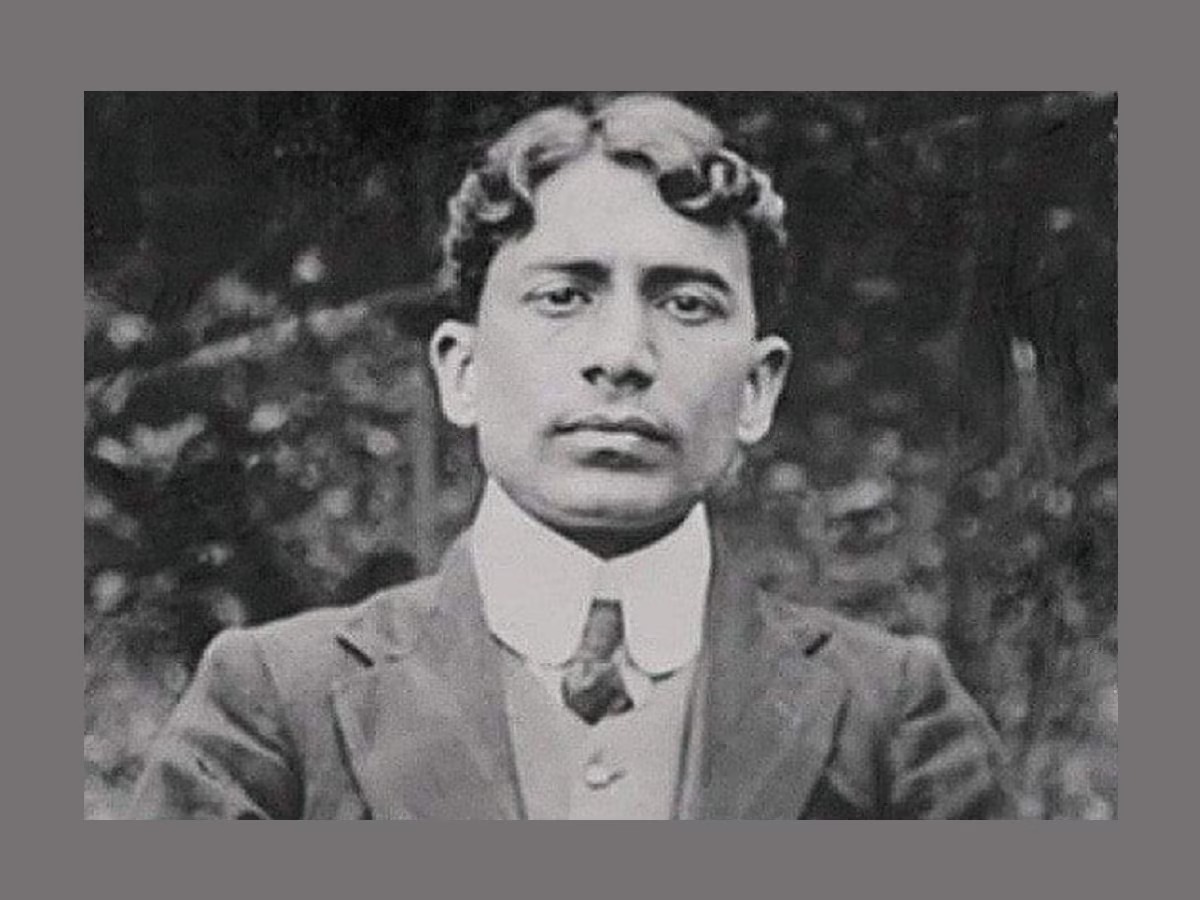
Martyrdom Anniversary of Revolutionary Madan Lal Dhingra Every year, on 17 August, India observes the martyrdom anniversary of Madan Lal Dhingra, the fearless revolutionary who embraced death for the freedom of his motherland. On this day in 1909, he was executed by hanging in London, becoming one of the earliest martyrs of India’s independence struggle.
Early Life and Struggles Madan Lal Dhingra was born on 18 September 1883 in Amritsar, Punjab, into a well-to-do family. His father, Dr. Ditta Mal Dhingra, was a renowned physician and a loyal supporter of the British government. Despite growing up in such a household, Madan Lal’s heart gravitated toward nationalism. After completing his schooling in Amritsar, he moved to Lahore for higher studies, where he was deeply influenced by the growing Swadeshi movement and nationalist ideas.
In 1904, while studying in Lahore, he protested against the use of British-made clothes and refused to apologize when reprimanded. This defiance led to his expulsion from college. Instead of returning home, he worked odd jobs in Shimla and Mumbai to support himself. Two years later, in 1906, he sailed to London to pursue mechanical engineering at University College London.
Meeting Savarkar and the London Revolutionaries London became the turning point in Dhingra’s life. There he came into contact with Vinayak Damodar Savarkar and Shyamji Krishna Varma, both prominent nationalist leaders. A year earlier, Varma had established India House, a hub for young revolutionaries abroad. Dhingra soon became a regular visitor, participating in fiery debates and ultimately joining the Abhinav Bharat Mandal, a revolutionary society founded by Savarkar and his brother.
Dhingra’s radical views led to a rift with his family. His father, embarrassed by his son’s activities, publicly disowned him through a newspaper notice. But Dhingra’s resolve only grew stronger.
Assassination of Curzon Wyllie On 1 July 1909, history was made. That evening, the National Indian Association was holding a meeting at Jehangir Hall in London’s Imperial Institute. Among the guests was Sir William Hutt Curzon Wyllie, a senior British official known for his hostile views towards Indian nationalists.
Dhingra, after days of preparation, attended the event armed with pistols. As Wyllie stepped out of the hall, Dhingra approached him under the pretext of delivering a message. Suddenly, he fired four shots at point-blank range, killing Wyllie instantly. A Parsi doctor, Cawas Lalcaca, who attempted to intervene, was also shot and killed. Dhingra did not flee. Instead, he calmly surrendered to the police, declaring, “People will get the news from tomorrow’s newspapers.”
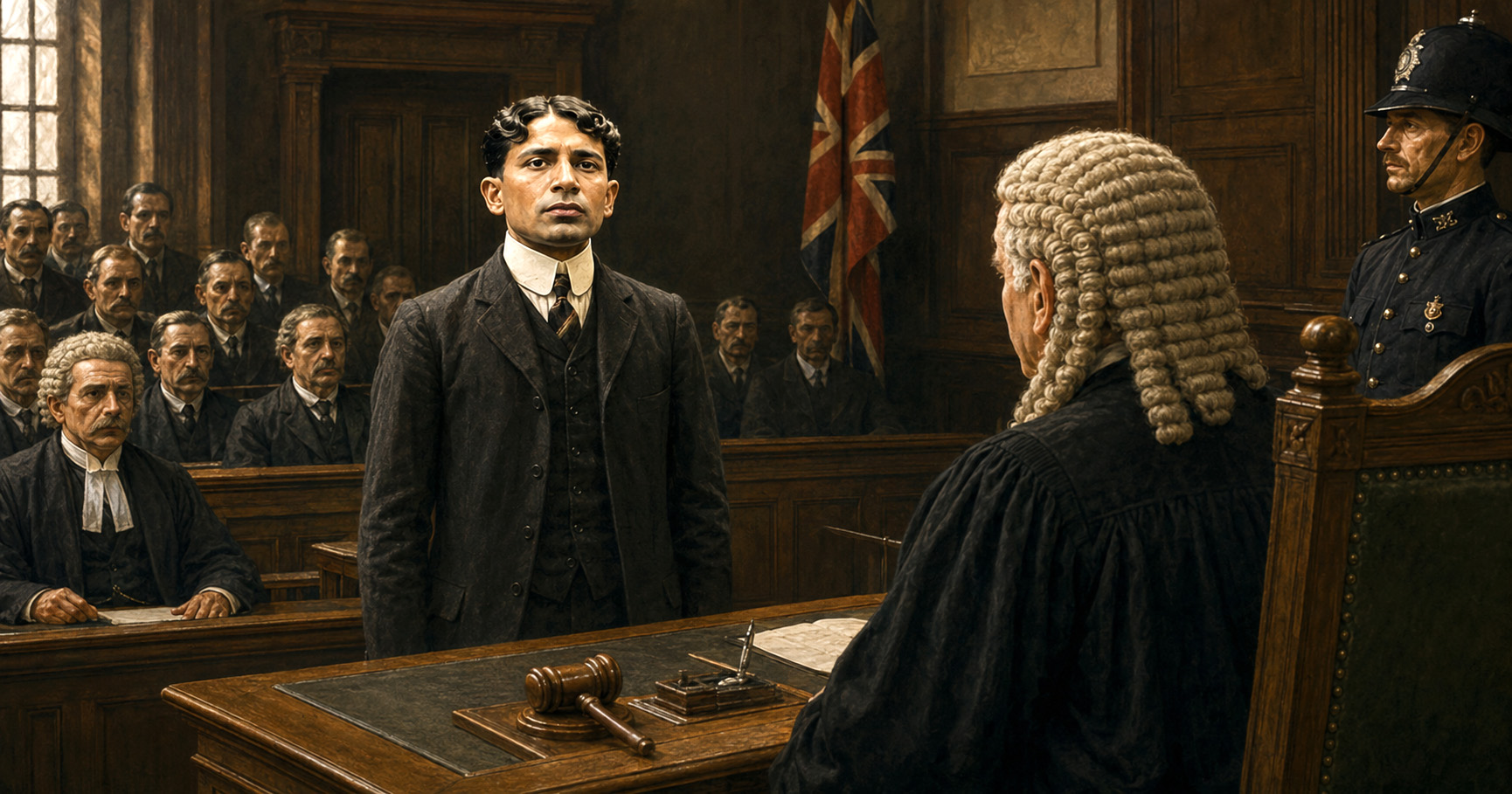
Trial and Execution Madan Lal Dhingra was tried on 23 July 1909 and swiftly sentenced to death. When the judge announced the verdict, Dhingra responded with pride: “I am proud to dedicate my life to my country.”
On the eve of his execution, a statement attributed to him was published in The Daily News. It read:
“I am a Hindu. The insult to my nation is the insult to my God. Serving my motherland is like serving Shri Ram and Shri Krishna. I wish to be born again and again as an Indian and sacrifice myself for the freedom of India. May God fulfill this wish. Vande Mataram!”
On 17 August 1909, Dhingra was hanged at Pentonville Prison in London. His remains were buried there, far from the soil he loved, and remained so for 67 years.
Repatriation of Mortal Remains In 1976, after persistent efforts, Madan Lal Dhingra’s mortal remains were finally brought back to India. His last rites were performed in Amritsar’s Malla Mandi on 20 December that year, in a solemn tribute to the hero who had been forgotten for decades.
Ideals and Influence Even as a young man, Dhingra displayed remarkable clarity of thought. He believed that poverty in India stemmed from colonial exploitation and concluded that Swaraj (self-rule) and Swadeshi (economic self-reliance) were the only remedies. His alignment with the Swadeshi movement and defiance against British goods revealed the ideological foundation that later drove him to revolutionary action.
Honours and Memorials Madan Lal Dhingra’s sacrifice has since been remembered in multiple ways. In 1992, the Government of India issued a postal stamp in his honour. A memorial was built in Gol Bagh, Amritsar, covering 4,000 square yards and inaugurated at a cost of ₹2.44 crore. Another memorial stands in Ajmer, Rajasthan, keeping his memory alive for future generations.
Yet, neglect has also shadowed his legacy. In 2012, his ancestral home in Amritsar, known as Dhingra Apartment, was demolished due to family indifference and lack of state support. Though the house could not be preserved, a statue of Dhingra was later installed in Town Hall as a symbolic gesture of remembrance.
Madan Lal Dhingra remains a blazing symbol of India’s revolutionary spirit. Disowned by his own family, he still embraced martyrdom for his motherland, sending a powerful message across continents—that India’s sons and daughters would not rest until freedom was won. His life and sacrifice remind us that the struggle for independence was not only fought in India but also on foreign soil, where patriots like Dhingra turned even London into a battleground for India’s liberty.
.png)