Statute of Unity: Not Just a Statue, But a Steady Income Generator

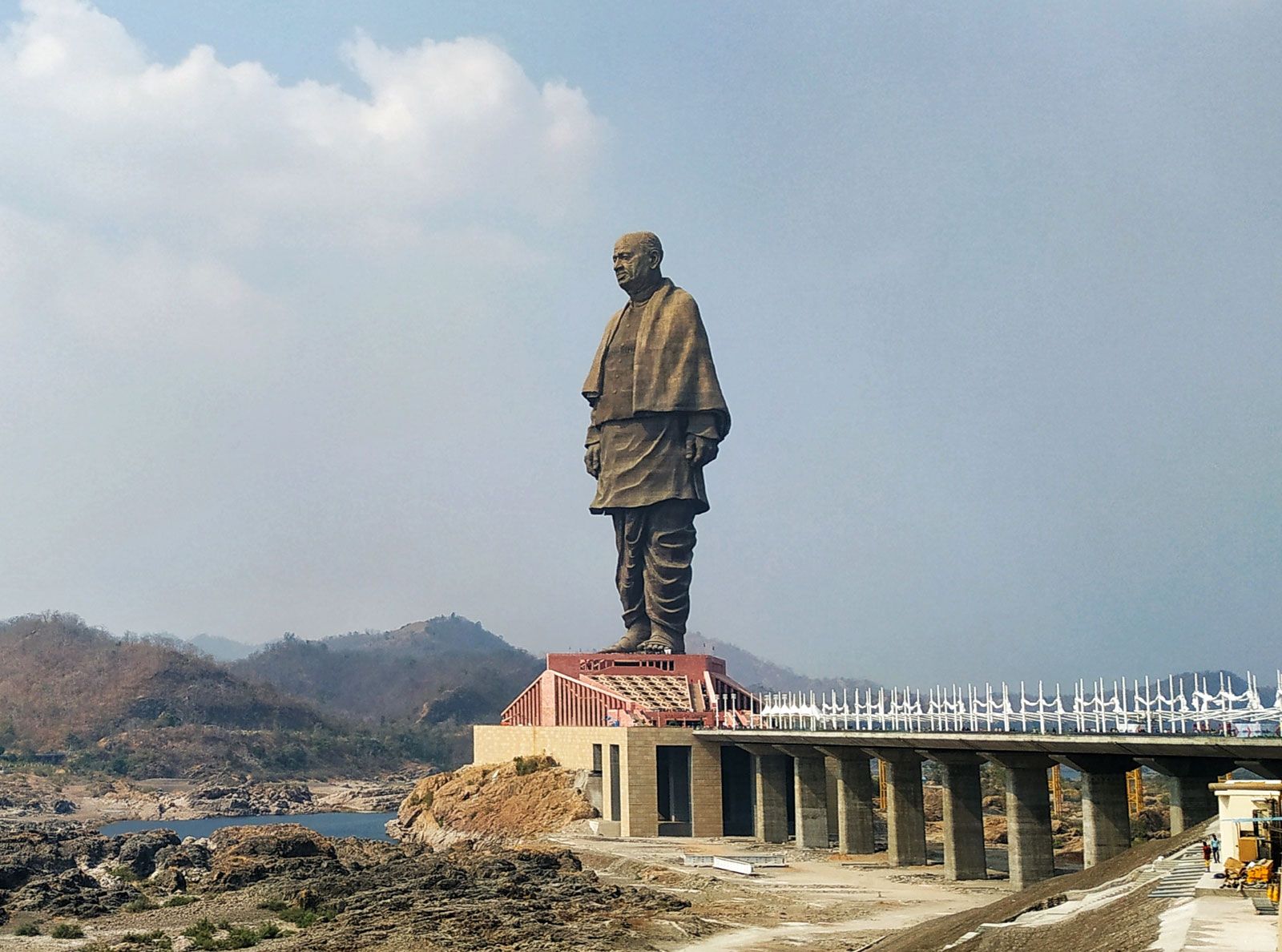
Let’s be honest: you don’t need another travel puff-piece about a giant statue. You need to know what actually changed for the people who lived there before the cameras arrived, especially the tribal women whose daily lives were rewired by new jobs, training, and market access. That’s why we wrote this: to place facts, not opinions, at the center, and to highlight the unusual, often-overlooked initiatives that pushed tribal women from survival to steady income.
Why today? October 31 matters because the Statue of Unity was inaugurated on 31 October 2018, Sardar Vallabhbhai Patel’s birth anniversary, also commemorated as the National “Rashtriya Ekta Diwas.” The date is the project’s official starting point and the anchor for many development programmes rolled out around Kevadia colony since then. The entire Kevadia area has been declared an electric vehicle zone to keep the Statue of Unity pollution-free.
After the 2018 unveiling, the area around Kevadia was developed as an integrated tourism zone, with a museum, a nursery, homestays, EV mobility, and handicraft retail emerging around it. Several targeted programmes, skill centres, women-only e-rickshaw fleets, Ekta Nursery production units, and organized homestays were introduced or scaled up in the years that followed to channel tourist spending into local livelihoods.
When Kevadia’s skyline got a new silhouette on 31 October 2018, it did more than add a tourism magnet; it set off a deliberate plan to convert visitors into a steady income generator for nearby tribal households. The Statue of Unity’s development blueprint folded in three practical ideas that together rewired everyday life for many tribal women: living-room homestays, women-led mobility (e-rickshaws), and a production-cum-retail hub at the Ekta Nursery. These aren’t celebrity events or showy programmes, they’re real, everyday efforts that have given people steady work, proper training, useful tools, and access to markets. And that’s exactly where the real change begins.
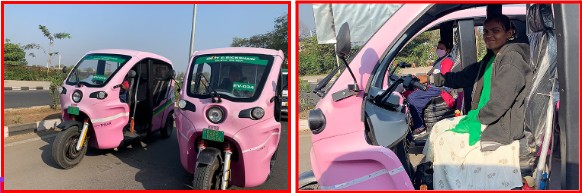
Women only e-rickshaws fleets in Gujarat following the Statue of Unity project | Credit: Autocar Professional
Homestays That Pay the Household Bills
The district administration mapped 116 houses across 22 villages to be turned into homestays, i.e., 252 rooms. The idea was simple and powerful: tourists who stay with tribal families spend money on food, local experiences, and crafts, and that cash goes straight into household pockets.
Local women were trained in hospitality basics so that homestays meet visitor expectations while keeping authenticity intact. Families that had few options for income now have a dependable, repeatable revenue stream tied to tourism.
Women Driving the Clean-Mobility Boom
Kevadia’s electric-vehicle zone and e-rickshaw initiative deliberately prioritised women drivers. Around 60 women were trained, securing driving licences and ferrying tourists across the complex, using a dedicated app that lists routes and fares.
The coupling of environmental policy (an EV zone) with an empowerment policy (women drivers) created a win-win situation—cleaner transport and steady self-employment for tribal women who previously had limited work options. Reports show dozens licensed and hundreds undergoing training, indicating a scaling plan rather than a one-off pilot.
Ekta Nursery: Classroom, Factory, and Shopfront All In One
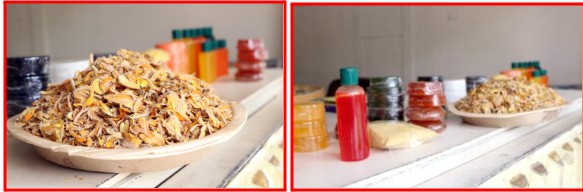
The Ekta Nursery acts as an educational attraction for visitors, but its second role is vital. It’s a production and sales hub. Women from local Sakhi groups harvest kesuda flowers (Butea monosperma) seasonally, dry them, and, with equipment and training from the forest department, process them into soaps, face washes, and powders. These products, sold at the Nursery’s retail counter, are chemical-free, Ayurvedic, and priced competitively, producing meaningful income for the women running the stalls. The Nursery also plants large numbers of saplings, reinforcing a link between ecological restoration and livelihoods.
Sumitra Tadvi, a homemaker from Gora village in Gujarat, runs a small yet thriving soap shop at the Ekta Nursery near the Statue of Unity. Despite studying only up to the 10th standard, she showcases remarkable business acumen. On days with massive footfall, her earnings range between ₹5,000 and ₹6,000, with several customers purchasing products worth as much as ₹2,000. The cosmetics sold at Ekta Nursery are entirely chemical-free, Ayurvedic, and priced 30–40% lower than the other natural products available in the market, ensuring steady sales throughout the year.
Women like Sumitra reflect the life-changing impact of the Statue of Unity project on tribal communities. Through dedication and newly acquired skills, these women have secured stable livelihoods while providing better educational opportunities for their children. With ongoing support and training from the forest department, including access to equipment and production facilities, they have become symbols of self-reliance and empowerment in rural Gujarat.
From Being an Isolated & Barren Area to a Vibrant Tourism Hub
Before this transformation, the region was largely barren and isolated, inhabited mostly by tribal families struggling with unemployment. The turnaround began when Prime Minister Narendra Modi, then Chief Minister of Gujarat, initiated a vision to develop the area around the Statue of Unity. Today, that vision stands realized, and the region has evolved into a vibrant tourism hub attracting visitors from across India and the world.
Like the iconic Ganga Aarti, a Narmada Aarti now takes place every evening, while new attractions such as maze gardens, forests, and houseboats draw thousands of tourists. The boom in tourism has created a surge in employment opportunities. Local girls now drive e-rickshaws and “Pink Autos,” offering women passengers a sense of comfort and safety, and symbolizing a new era of empowerment.
It’s worth recalling that during the tenure of a previous government, Narendra Modi had to fast to obtain permission to install gates on the Narmada dam. After assuming office as Prime Minister, he approved the project within a week, a decision that unlocked large-scale development across the region. Today, over 70% of the area’s infrastructure and tourism projects are complete, with even more projects underway. Gujarat’s growth story, anchored by the Statue of Unity, continues to redefine how development and empowerment can go hand in hand.
Training, Certification, and Dignity
A recurring pattern among each initiative is training: driver training and licences, hospitality coaching for homestays, and forest department technical training for cosmetic production. Training converts informal work into recognized jobs, and recognition matters as it changes bargaining power at home and raises the likelihood that daughters will receive better schooling and career expectations. Early data points, trained cohorts, licensed drivers, and identified homestay units show the programmes are structured to create durable opportunities, not short seasonal bursts.
What Does This Mean on the Ground?
Numbers are less dramatic than the lived outcomes. An e-rickshaw driver who used to do casual farm work now keeps the household afloat with daily fares; a homemaker running a soap stall at Ekta Nursery earns predictable takings on busy days; a homestay host sees steady weekend bookings. Thus, together, the initiatives have not only generated diversified incomes but have also helped in building skills and opening markets directly to tribal women.
Unveiling of Statue of Unity empowers the tribal women in Gujarat’s Kevadia
The Statue of Unity and the development projects around Kevadia illustrate how tourism was used strategically to generate local, female-centred livelihoods. The project is a major landmark, yes. But it also came as an enabling platform. Through concrete homestay mapping of 116 houses, providing training to tribal women as e-rickshaw drivers, establishing Ekta Nursery production centre, and producing Kesuda-based cosmetics, the Statue of Unity is not just a mere tourist spot. It is a transformed tourism hub for tribal women around Kevadia.
.png)
.jpg)