The Battle of Delhi (1757): How the Marathas Reclaimed Indian Sovereignty from Afghan Control

A Historic Turning Point in North India
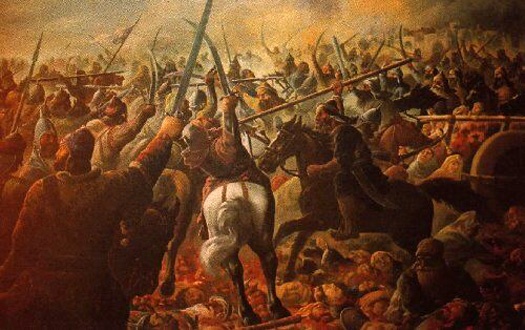
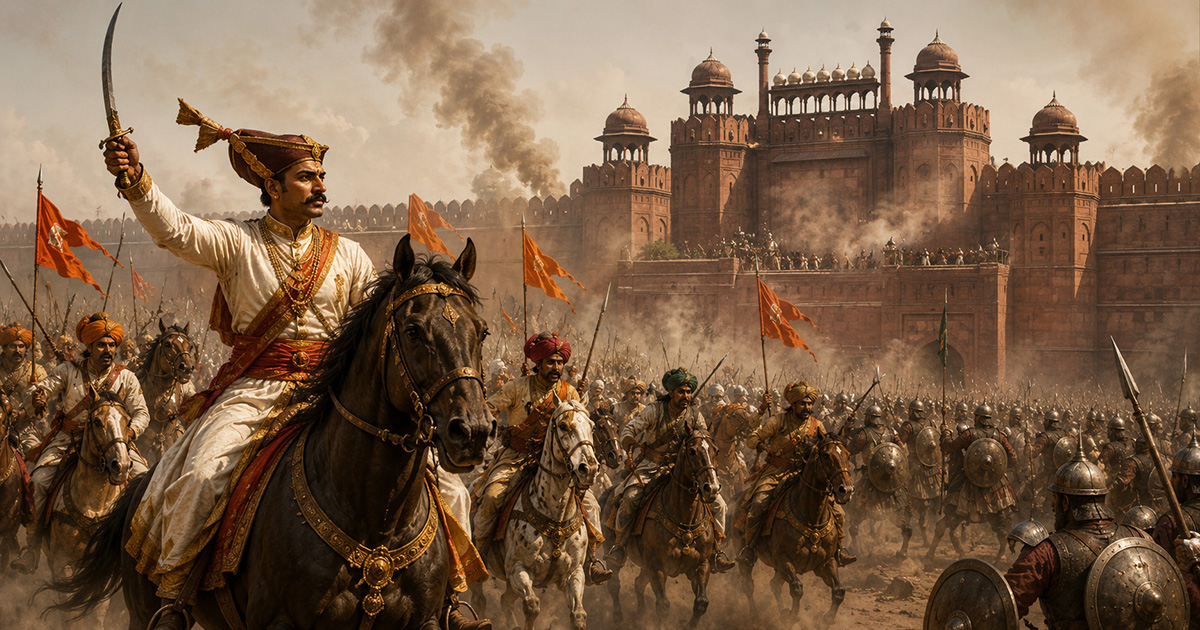
In the year 1757, a crucial battle unfolded on the soil of Delhi, the symbolic heart of India. This battle wasn’t just about two powers clashing for territory, it was about who would hold influence over India’s capital, and by extension, its political destiny. The Battle of Delhi, fought in August 1757, was between the rising Maratha Confederacy and the Rohilla Afghans, who were allied with Ahmad Shah Abdali, the powerful ruler of the Afghan Durrani Empire.
Taking place near the Red Fort, on the western bank of the Yamuna River, this battle signaled the beginning of a major shift in power from foreign influences back to native Indian leadership. The Marathas, emerging as the most powerful Indian force of the time, successfully defeated the Rohilla Afghans and reclaimed control over the Mughal capital. This victory was the result of careful strategy, diplomatic coordination, and superior leadership.
Who Were the Rohilla Afghans?
The Rohillas were Afghan-origin warriors who had migrated to India and settled in the Rohilkhand region, which today lies in western Uttar Pradesh. Initially arriving as military adventurers and mercenaries, they took advantage of the weakening Mughal Empire to establish their own authority in North India. By the mid-18th century, they had become a significant political and military force in the region.
One of their most powerful leaders was Najib-ud-Daula, who rose through the ranks and held the important position of Mir Bakhshi (military paymaster) in the Mughal court. He became the key face of Afghan influence in Delhi and was known for his strategic and political skills. The Rohillas were also closely allied with Ahmad Shah Abdali, the Durrani ruler who had already invaded India multiple times. In fact, the Rohillas invited Abdali into India during his fourth invasion in early 1757 and supported his efforts to dominate northern India. After Abdali returned to Afghanistan, he left Delhi under the control of Najib-ud-Daula and his Rohilla forces.
Najib-ud-Daula’s Role in Afghan Domination
Najib-ud-Daula was not just a military leader; he was a political strategist who managed to gain the trust of both the Mughal emperor and Abdali. In early 1757, after Abdali’s fourth invasion, Najib was appointed as the governor of Delhi. He collected taxes on behalf of the Afghan ruler and acted as a guardian of Abdali’s interests in India.
Najib maintained a garrison of several thousand troops and fortified Delhi against any internal or external threats. His role was central in maintaining the Afghan grip over the region. However, his dominance soon faced strong opposition, not just from Mughal nobles but also from Indian powers like the Marathas, who were not willing to let a foreign-backed ruler control the heart of India.
The Maratha Confederacy and Its Rise in the North
By 1757, the Maratha Confederacy had emerged as the strongest Indian power in the subcontinent. They had a well-organized military structure and had already expanded their influence across Central and Western India. Under the leadership of Peshwa Balaji Baji Rao and his generals, the Marathas had begun pushing northwards.
When Mughal nobles in Delhi, especially the Wazir Imad-ul-Mulk, realized that Najib-ud-Daula was effectively controlling the emperor and acting on behalf of a foreign power, they approached the Marathas for help. Imad-ul-Mulk formally invited the Maratha leaders to liberate Delhi and restore Indian control. This was not just a political move; it was also a plea to save the last remnants of Mughal prestige from Afghan domination.
Timeline of the Battle: From Abdali’s Departure to Maratha Victory
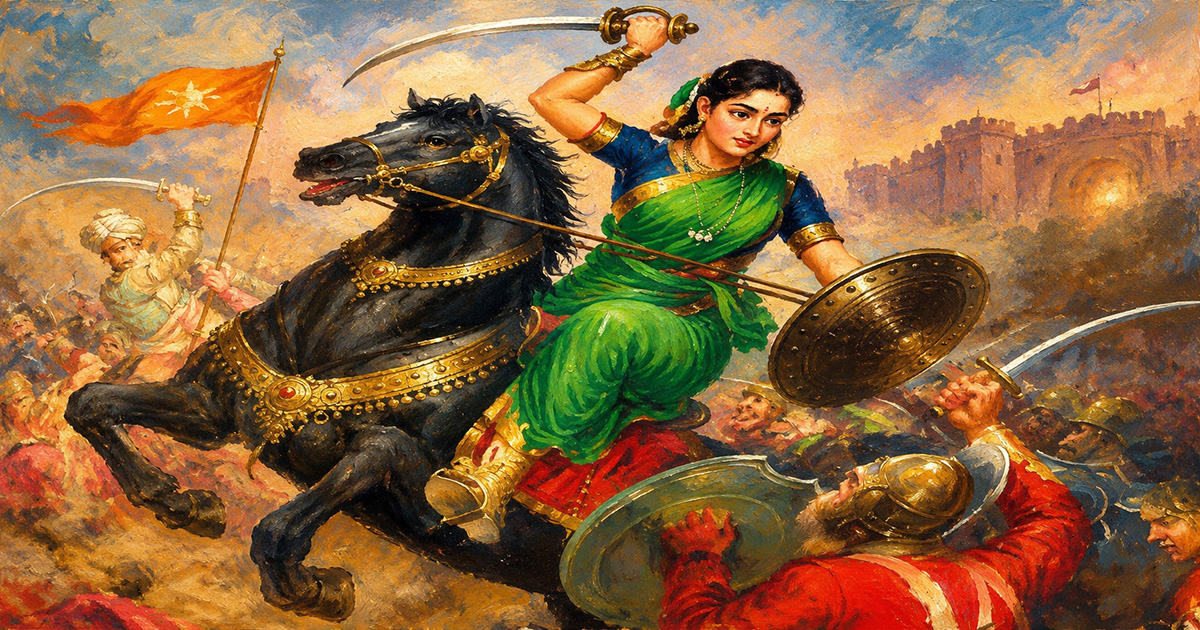
In early 1757, Ahmad Shah Abdali returned to Afghanistan, leaving Najib-ud-Daula in charge of Delhi. As the Afghan forces tightened their grip, discontent spread among the nobles and citizens. Seeing an opportunity, the Maratha leadership sent a powerful expedition led by Raghunath Rao. The Maratha generals who joined this campaign included Malhar Rao Holkar, Dattaji Shinde, and Antaji Mankeshwar.
On 11 August 1757, the Maratha army reached the outskirts of Delhi and began their military operation. They set up camp across the Yamuna River and launched a full-scale siege. Najib-ud-Daula had about 7,500 infantry and a few thousand other troops defending the city, backed by strong artillery and fortified positions. He assigned his trusted lieutenants Qutub Shah and Mulla Aman Khan to key locations inside the city.
The Marathas, instead of attacking directly, used effective siege tactics. They captured the ferry points across the Yamuna, cutting off all supply routes into Delhi. They blocked food supplies and burned down key supply boats, leading to starvation and panic within the city. Over the course of 11 days, Najib’s forces found themselves trapped and outnumbered.
Eventually, Najib-ud-Daula realized that further resistance would lead to total destruction. He surrendered to the Marathas and negotiated safe passage out of Delhi in return for a tribute of Rs 5 lakh. The Marathas then appointed Antaji Mankeshwar as the new governor of Delhi, while leaving the Mughal emperor Alamgir II on the throne as a symbolic ruler.
Immediate Results: Marathas Become the Real Power in Delhi
With the defeat of the Rohilla Afghans and the removal of Najib-ud-Daula, the Marathas became the de facto rulers of Delhi. Though the Mughal emperor still sat on the throne, real power now rested with the Maratha commanders. This moment marked a crucial shift in Indian history, a native Indian power had successfully taken control of the Mughal capital from foreign invaders.
The victory gave the Marathas a major morale boost and allowed them to expand their influence further. By 1758, they had moved into Punjab and even pushed beyond the Indus River into territories near the Khyber Pass. This aggressive northern expansion set the stage for future conflicts with both Afghan forces and regional rulers.
Najib’s Return and the Road to Panipat
Although Najib-ud-Daula had been expelled from Delhi, he was not permanently defeated. He moved eastward and gradually regained political strength by aligning with the Nawab of Awadh and re-establishing contact with Ahmad Shah Abdali. Najib’s political comeback played a critical role in the formation of an anti-Maratha alliance that would eventually result in the Third Battle of Panipat in 1761.
In this future battle, the Marathas would suffer a massive defeat at the hands of the combined Afghan, Rohilla, and Awadh forces. Yet, it is important to understand that this later event does not diminish the significance of their 1757 victory in Delhi. It showed that coordinated Indian resistance could temporarily push back even the most powerful foreign invaders.
Tactics, Leadership, and Strategy
The success of the Marathas in the Battle of Delhi was based on calculated strategy, effective leadership, and precise timing. The siege tactics used by the Marathas, such as cutting off food supplies and isolating the city, played a crucial role in weakening the enemy.
The involvement of leaders like Raghunath Rao, Malhar Rao Holkar, and Antaji Mankeshwar ensured both military efficiency and political legitimacy. Moreover, their ability to cooperate with Mughal nobles like Imad-ul-Mulk showed that the Marathas were not just conquerors, but also skilled diplomats who understood the value of forming alliances to achieve strategic goals.
British Observations and Documentation
British officials at the time closely monitored the situation in Delhi and the movements of the Maratha army. Reports and letters sent by British agents from Delhi reveal how the colonial powers were keeping track of the shifting balance of power in North India. These records offer additional evidence of the Maratha victory and its impact on the political landscape of the subcontinent.
Though short-lived, the Maratha capture of Delhi in 1757 had a long-lasting symbolic and strategic importance. It demonstrated that Indian forces could reclaim sovereignty from foreign-backed powers. Even though the Maratha control over Delhi didn’t last long, what happened in 1757 sent a powerful message, that Indian forces had the strength and unity to stand up to foreign invaders and reclaim their own land.
.png)


.jpg)