What is the India-Bhutan Treaty of Peace and Friendship? How Are Relations Between the Two Nations Today?

What is the India-Bhutan Treaty of Peace and Friendship?
On August 8, 1949, India and Bhutan signed the Treaty of Perpetual Peace and Friendship in Darjeeling. The main objective of the treaty was to peacefully regulate relations between the two nations after the end of British colonial rule. This historic agreement marked the beginning of a new era in bilateral ties, paving the way for cooperation in areas such as trade, hydropower development, and commerce.
Who Led the Signing of the Treaty?
The treaty was signed under the leadership of Indian Prime Minister Pandit Jawaharlal Nehru and Bhutan’s King Jigme Wangchuck.
The 2007 Amendment to the Treaty
On February 8, 2007, the two nations revised the treaty to update its provisions. Several old clauses were removed, and new ones were introduced to strengthen economic cooperation. Importantly, Bhutan was granted greater freedom in conducting its foreign policy. This amendment was signed under the leadership of the Government of India and the Royal Government of Bhutan.
Relations Before the Treaty
Before India’s independence in 1947, relations between India (under British rule) and Bhutan were often tense.
- In 1772, Bhutan attacked Cooch Behar to assist its ruler, leading to a strong British military response.
- On April 25, 1774, the Druk Desi of Bhutan and the British East India Company signed the Anglo-Bhutanese Treaty.
- Several wars followed between Bhutan and the British, with Bhutan repeatedly targeting areas in West Bengal and Assam, escalating tensions.
How Are India-Bhutan Relations Today?
Cultural and Educational Ties – The India-Bhutan Foundation was established in 2003 to promote educational and cultural exchanges. Bhutanese students receive scholarships to study in India, and Buddhist pilgrimage tourism has been encouraged.
Digital Cooperation – India introduced the BHIM app and RuPay card in Bhutan to promote digital payments. Optical fiber networks were set up to enhance digital connectivity. Both countries jointly developed the IND-BHU SAT polar satellite launch vehicle (PSLV), and Bhutan received 16MHz bandwidth on the South Asia Satellite.
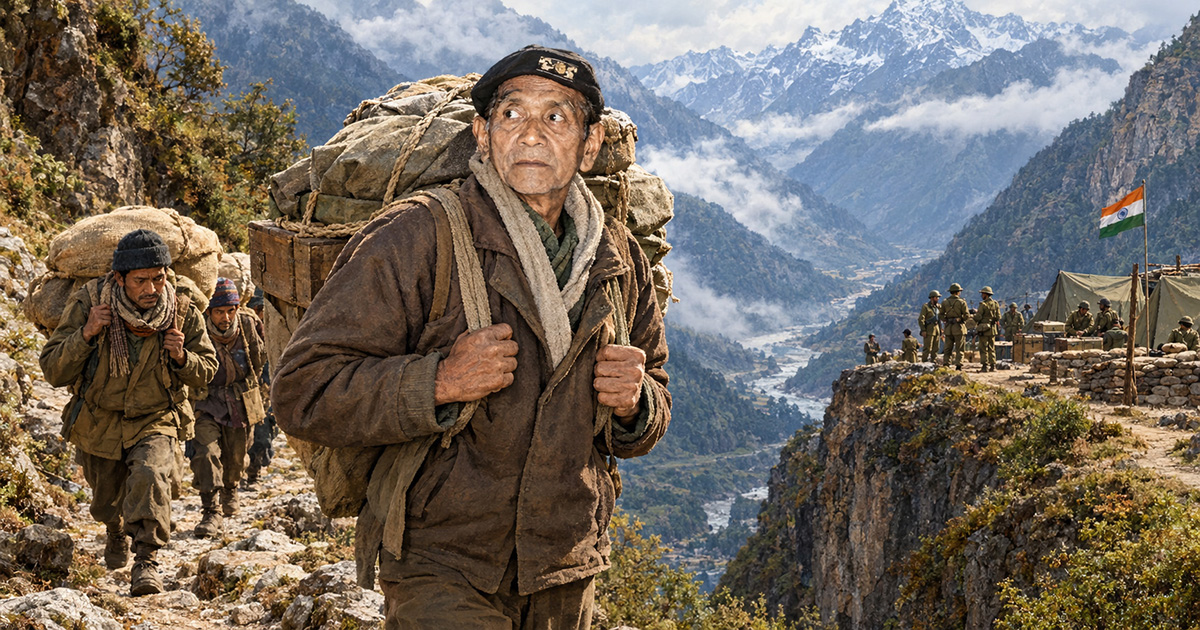
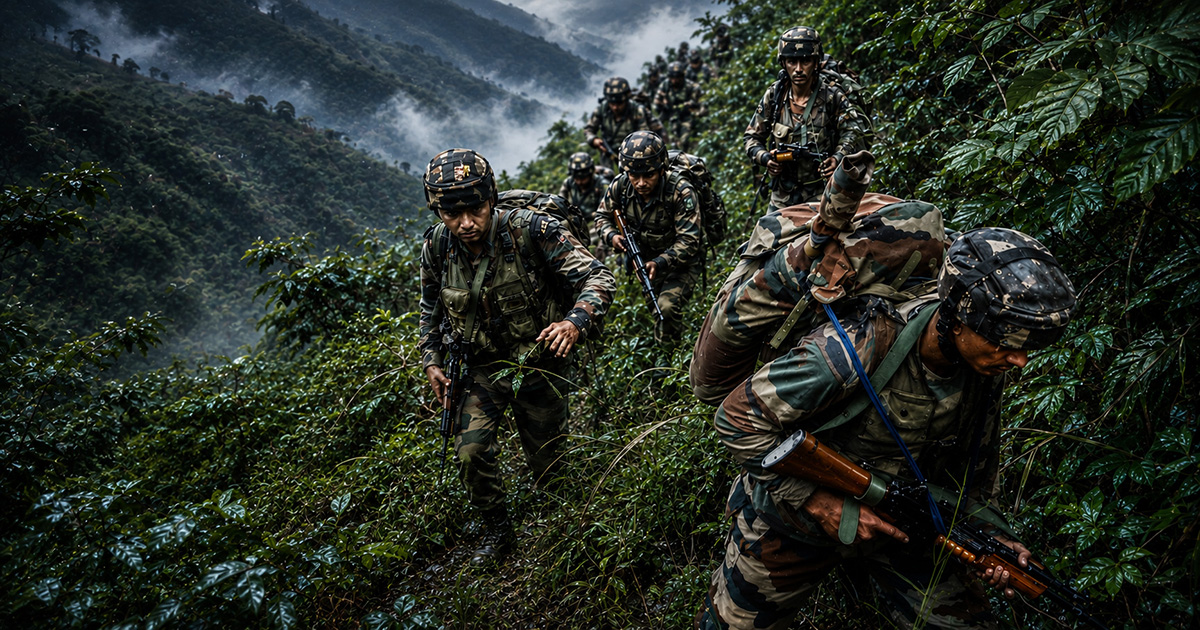
Security Cooperation – Under the 1949 treaty, India plays a key role in Bhutan’s security. The Indian Military Training Team (IMTRAT) trains Bhutanese forces. Project DANTAK, run by India’s Border Roads Organisation, builds and maintains roads in Bhutan.
ALSO READ: “Bhutan Receives Rs 2,068 Crore, the Largest Share of India’s External Aid for 2024-25”
Economic Assistance – India has been a major contributor to Bhutan’s Five-Year Plans. For Bhutan’s 12th Five-Year Plan (2018-2023), India provided ₹4,500 crore in assistance.
Humanitarian Cooperation – During the COVID-19 pandemic, India supplied Covishield vaccines to Bhutan, while Bhutan supplied oxygen to India. IMTRAT also helped in youth skill development and leadership programs.
Why is Bhutan Important for India? India is Bhutan’s largest trading partner, with the trade balance in India’s favor. Bhutan holds a strategic position between India and China. In 2025, the King and Queen of Bhutan visited India, reaffirming India’s support for the Gelephu Mindfulness City project.
Bhutan’s rich biodiversity is ecologically important for India. The two nations also share deep cultural ties dating back to ancient times.
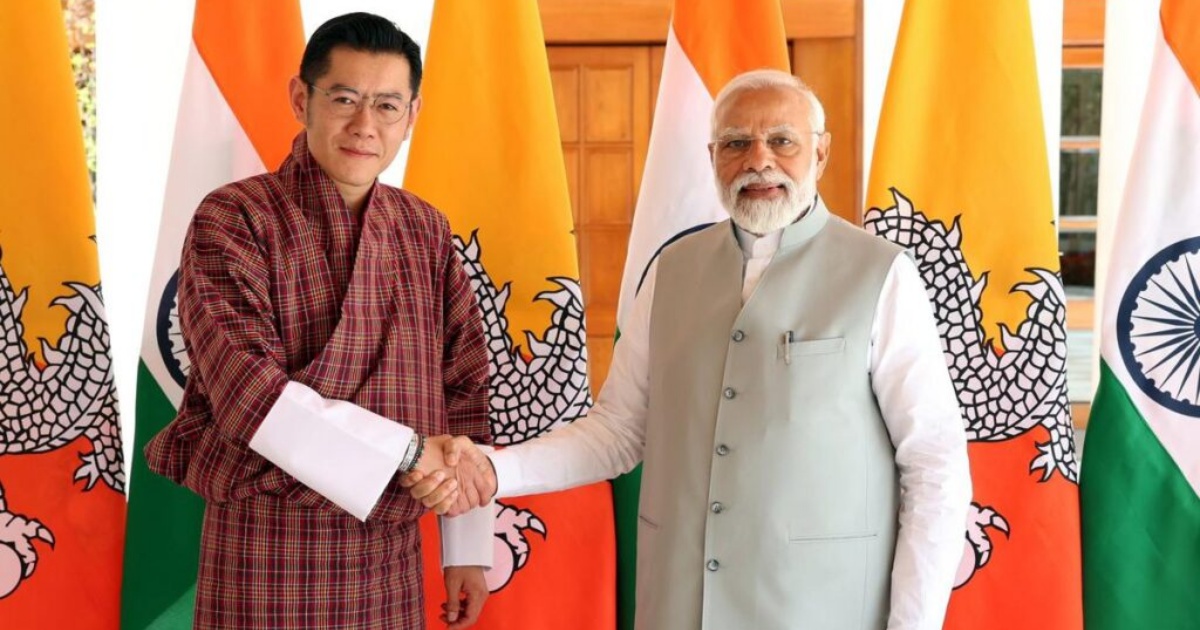
On March 22, 2024, Prime Minister Narendra Modi was conferred Bhutan’s highest civilian award, the Order of the Druk Gyalpo. Notably, in 2014, Bhutan was Modi’s first foreign visit after becoming Prime Minister. Bhutan’s Prime Ministers have also attended key events in India, including Modi’s swearing-in ceremonies.
Recent High-Level Engagements
In 2019, during PM Modi’s Bhutan visit, both leaders inaugurated the Ground Earth Station of the South Asia Satellite in Thimphu. Recently, Bhutan’s Prime Minister Dasho Tshering Tobgay visited India, attending the inauguration of the School of Ultimate Leadership (SOUL) and calling PM Modi his “elder brother and guide.”
The Current State of Relations in 2025
India and Bhutan’s ties have further strengthened in 2025, with key developments including:
- Economic Support – Under the 13th Five-Year Plan, India has pledged ₹10,000 crore in assistance to Bhutan.
- Gelephu Mindfulness City Project – Announced recently, this 2,500 sq. km project will focus on agriculture, finance, and tourism. India will provide full support, including initiatives like the Digital Reserve Bank (ORO) and digital currency (TER).
- Border Connectivity – On November 7, 2024, an Integrated Check Post (ICP) was inaugurated at Daranga, Assam, to boost tourism between eastern Bhutan and Assam. West Bengal Chief Minister Mamata Banerjee has urged the central government to establish an Indo-Bhutan River Commission to address flood issues.
.png)