Bangladesh-Based Islamist Networks Expanding into West Bengal: A Growing Security Challenge for India

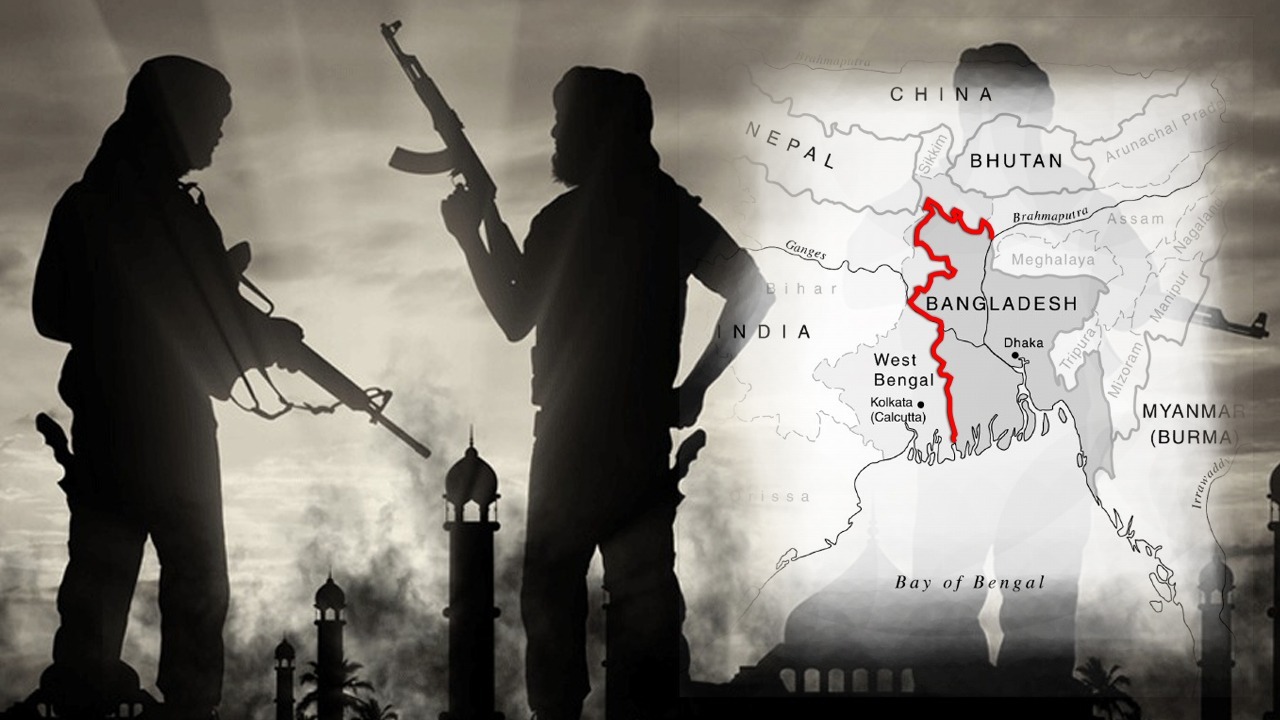
The border region between West Bengal and Bangladesh has long been a focal point of various geopolitical and security complexities. While terrorist activities were relatively under check in Bangladesh during Sheikh Hasina’s government, the situation has worsened after the violent “regime change”.
Indian security agencies assess that Islamist terrorist groups have intensified radical and anti-India activities, taking advantage of political instability, change in power, and administrative weaknesses in Bangladesh. This is having a direct and spill over effect on West Bengal, which is a matter of serious concern for India’s national security.
This article discusses in detail why terrorist organisations are attempting to get a foothold in West Bengal, which Bangladesh-linked organisations are active, what their methods of operation are, and what picture emerges from recent events. It should be noted that this analysis is primarily based on reports and news-based information from Indian and international security agencies.
Why West Bengal is on the Radar of Terrorist Groups
India and Bangladesh share a border of approximately 4,096 kilometers, a large portion of which runs through West Bengal. Many parts of this border stretch across rivers, damp lands, forests, and densely populated areas, making surveillance difficult. Taking advantage of this, illegal infiltration, forgery of documents, and smuggling of arms and explosives have been persistent for a long time.
Several border districts, such as Malda, Murshidabad, and North and South 24 Parganas, have a relatively higher proportion of Muslim population. For example, the Muslim population in Malda district is approximately 71 percent. According to security agencies, terrorist organisations try to conceal their activities by using this demographic reality as a shield.
Various reports indicate that political instability has increased further in Bangladesh after the fall of Sheikh Hasina’s government in 2024. In this atmosphere of instability, Jamaat and other jihadist groups are getting the opportunity to reorganize themselves. Their goal is not only Bangladesh but also to spread the ideology of establishing Islamic rule in the wider region. Intelligence sources claim that they are using West Bengal as a transit route, a safe haven, and sometimes even as an operational base. Besides, there are allegations that foreign powers like Pakistan’s ISI are also playing a role in expanding this network.
Major Bangladesh-linked Islamist organisations
Jamaat-ul-Mujahideen Bangladesh (JMB)
This organisation, banned in Bangladesh, has established the oldest and most organised network in West Bengal, according to investigations. The organisation was particularly active in three areas: manufacturing explosives, establishing safe houses, and planning future attacks.
Ansarullah Bangla Team / Ansar al-Islam
This terrorist organisation primarily focuses on ideological radicalization. Multiple investigations indicate that it targets educated and tech-savvy young people through social media, encrypted chat apps, and online religious content.
Harkat-ul-Jihad-al-Islami Bangladesh (HuJI-B)
Although a relatively old terror organisation, security agencies fear that some of its sleeper cells may still be active. The memories of past terrorist activities in Kolkata and surrounding areas still keep the administration on high alert.
IS-influenced Modules and Other terror outfits
In recent times, the ideology of the international jihadist organisation Islamic State (IS) is spreading through online platforms. Intelligence reports indicate that its direct or indirect influence is being observed among some young people in West Bengal.
Burdwan Blast
The 2014 Burdwan blast was a major turning point in terrorist activities in West Bengal. Two terrorists died in an explosion while making bombs in a rented house. The investigation revealed that the house had virtually become a terrorist factory and had direct links to the terrorist network in Bangladesh.
After this incident, it became clear that West Bengal was not just a transit corridor, but was also being used as an active operational base. This led to a fundamental change in the approach of both central and state-level security agencies, and a series of raids and arrests followed.
New Strategies of Radicalization
Currently, terrorist organisations are giving more importance to psychological and ideological preparation before directly handing over weapons. Young people are being gradually influenced through a combination of religious identity, narratives of global Muslim persecution, and online propaganda. Digital media is the main weapon in this new strategy.
Politics, Administration, and Debate
This issue has generated intense debate in West Bengal politics. Security experts believe that the problem cannot be solved through political rhetoric. Without coordination between the central and state governments, intelligence sharing, and awareness at the social level, it will be difficult to tackle this challenge.
Islamist terrorism linked to Bangladesh in West Bengal poses a challenge to India’s security. It is not merely a question of law and order, but a combined test of border management, ideological resistance, and social awareness. The real enemy here is extremist ideology. Future security strategies must be determined based on this understanding.




.jpg)