Bhupendra Nath Datta: The Forgotten Revolutionary Who Bridged Swadeshi and Socialism

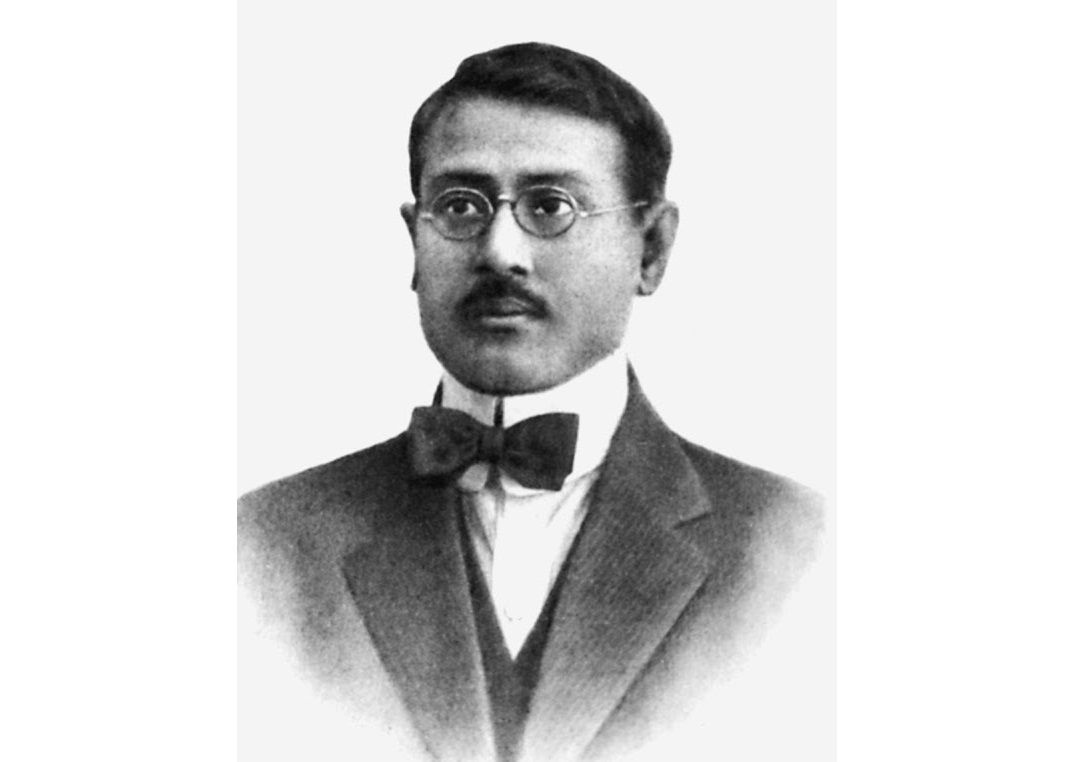
1. Early Life and Education: Family background
Birth & Parents Born on September 4, 1880, in Calcutta, Bhupendra Nath Datta was the youngest son of Vishwanath Datta, a High Court attorney versed in multiple languages and literature, and Bhuvaneshwari Devi, a cultured homemaker who recited epics and taught English to her children.
Siblings & Household He grew up within a large, intellectually rich household that included his brothers, Narendranath (Swami Vivekananda) and Mahendranath, along with several sisters. After Vishwanath’s death in 1884, the family endured financial struggles and displacement until their grandmother stepped in.
Connection to Swami Vivekananda Bhupendra’s elder brother Narendranath (b. 1863), became globally renowned as Swami Vivekananda. Bhupendra frequently heard his brother’s speeches as early as age 4–5, and Vivekananda’s fame deeply shaped the young Bhupendra’s worldview.
Education in India, Germany & USA He completed his entrance exam in 1898 at the Metropolitan Institution, founded by Ishwar Chandra Vidyasagar.
Early Revolutionary Connections Around age 22 (1902–06), he joined Bengal’s revolutionary network, Bengal Revolutionary Society and later the Jugantar group, while engaging in editing the Jugantar Patrika.
ALSO READ: “When Pride Met Tyranny: 15 Facts About Alauddin Khilji’s Attack on Chittorgarh”
Advanced Studies Abroad Following a jail term in 1907, he relocated:
- USA (1908–12): Earned an M.A. from Brown University, and studied at NYU.
- Germany (1914–20s): Became active in Ghadar Party, served as secretary of the Indian Independence Committee (Berlin), obtained a D.Phil in Anthropology from Hamburg University in 1923.
Influence of Brahmo Samaj & Bengal Renaissance As a student, Bhupendra joined the Brahmo Samaj, inspired by leaders like Keshub Chandra Sen and Debendranath Tagore. His mentor, Sivanath Sastri, strongly influenced his worldview.
Core Beliefs Adopted He absorbed the Brahmo principles: monotheism, caste abolition, rationalism, and resistance to superstition—beliefs which later underpinned his revolutionary and sociological frameworks.
Context of Bengal Renaissance The broader Bengal Renaissance, led by Reformers like Raja Ram Mohan Roy and Debendranath Tagore, promoted rational faith, education, women’s rights, and social equity. These currents shaped Bhupendra’s early ideological identity.
2. Revolutionary Involvement
Role in Anushilan Samiti and Revolutionary Movements in Bengal Joining the Inner Circle: Around 1902–03, the young Bhupendra Datta was drawn into the elite, secretive group Anushilan Samiti, founded in Calcutta by Pramathanath Mitra. This society—initially framed as a physical training “akhada”—soon evolved into a shadowy revolutionary network emphasizing armed resistance.
Training & Discipline: Anushilan’s modus operandi included rigorous martial arts, strict discipline, and ideological grounding. Members studied Indian history, European political thought, and tactics—laying ideological groundwork for violence against the British.
A Radical Offshoot Emerges: By April 1906, the more aggressive elements under Barindra Kumar Ghosh and Datta splintered off to form the Jugantar faction, reinforcing the commitment to militant action.
Publishing Revolutionary Propaganda: Bhupendra took on the role of editor for Jugantar Patrika, a fiery Bengali weekly launched in March 1906. The journal passionately advocated for bloodshed to end colonial rule—selling up to 20,000 copies and actively recruiting youth.
Connections with Jugantar, Early Revolutionary Network
Leading the Wing: Jugantarliterally “New Era”, was the core of Bengal’s freedom movement. Under Barindra Ghosh’s leadership, Bhupendra Datta was integral to launching its ideological arm and coordinating its activities.
Major Operations: The group orchestrated high-profile acts: the 1907 failed assassination of Sir Fuller, the 1908 Muzaffarpur bombing targeting Magistrate Kingsford (resulting in Khudiram Bose’s martyrdom), and broader Alipore conspiracy arrests that followed.
Support Network: Jugantar had far-reaching connections—organised into cells across Bengal and affiliates in Dhaka’s Anushilan Samiti. They procured explosives (e.g. Hemchandra Kanungo trained in Paris) and smuggled Mauser weapons as part of the famous 1914 Rodda heist.
3. International Exposure: World War I & Exile Across Continents
In 1908, after his release from prison in India, Datta left clandestinely for the USA, living at the revolutionary hub of India House in San Francisco. He earned an M.A. from Brown University and joined the reformist nationalist circles.
The outbreak of World War I shifted his revolutionary zeal to Germany, where he became the secretary of the Indian Independence Committee, coordinating operations (including propaganda and arms procurement) from 1916–18.
Studies in Germany (University of Berlin, Hamburg)
Though some sources mention detailed affiliations, the most reliable account is that Datta earned a doctorate from Hamburg University in 1923, likely in Anthropology or a related discipline.
He also joined the German Anthropological Society in 1920 and later the German Asiatic Society in 1924, marking his scholarly integration into European academic circles.
Association with International Socialist & Communist Movements
Around 1920–21, Datta became closely associated with the Comintern (Communist International). He was present in Moscow in 1921, along with Chatto (Virendranath Chattopadhyaya) and others. His “thesis on India” was submitted to Lenin and Lenin responded within days (August 26, 1921), advising him to focus on mobilizing peasants.
Datta, Chatto, and Virendranath Chattopadhyaya sought to emphasize cooperation with Indian nationalists—a contrast to MN Roy’s more sectarian approach. Their critiques were noted in the Third Congress of Comintern.
Participation in International Anti‑Imperialist Platforms
In Stockholm in 1917, the Berlin Committee (including Datta) participated in an International Socialist Conference. They resolved to form Indian-born Marxist and nationalist organisations abroad—a critical milestone in transnational anti-imperialist coordination.
In Berlin (1922), Datta served as secretary of the India Independence League, supported by German officials. The German Foreign Office expelled its members by 1923, but it still spread literature highlighting developments in the Soviet Union and world communist movements.
4. Role in the Indian National Movement
Revolutionary foundations Bhupendra joined the Bengal Revolutionary Society in 1902 and became the editor of Jugantar, the revolutionary publication advocating armed resistance. His bold writings led to imprisonment in 1907 for sedition.
Global revolutionary network After his release, he escaped to the USA, then moved to Germany and joined the Berlin Indian Independence Committee. He worked closely with the Ghadar Party and German and Bolshevik circles to plan anti-British uprisings in India during World War I.
Mass mobilisation & Congress involvement Returning to India in 1924, Datta campaigned among peasants and workers. He joined the Indian National Congress, advocated farmers’ rights at the 1930 Karachi session, served as vice-president of AITUC, founded unions like the Calcutta Tramways Workers’ Union, and led famine relief efforts in 1943.
5. His version of nationalism vs Congress‑style nationalism
Inclusive, class-informed nationalism While Congress nationalism under Gandhi emphasised non-violent mass struggle, Datta insisted on coupling it with class-consciousness. In a 1920 memorandum to Congress, he urged them to organize peasants and laborers, reflecting a Marx-informed grassroots approach.
Respect for mass politics, critique of nationalism’s limits He acknowledged Gandhi’s success in mobilizing masses but critiqued nationalism that ignored socio-economic disparities. His stance influenced Lenin’s advice to focus on agrarian realities.
How his ideas complemented and contradicted mainstream leaders
Complementary elements:
- Leveraged Congress’s reach to add labor/farmer agendas (e.g., farmers’ rights in 1930).
- Worked closely with Nehru and Bose at AITUC, building labor solidarity.
Contradictions:
- Rejected Congress’s upper-class bias and sometimes viewed it as “sentimental nationalism” insufficient for economic justice.
- Clashed with CP(I) leaders over their reluctance to collaborate with Congress—the communists believed Congress was too bourgeois, but Datta disagreed.
- Unlike hard-line communists, he supported the Quit India Movement and even wartime alliances when Soviet affiliations demanded neutrality.
6. Scholarship & Intellectual Contributions
Revolutionary History in Bengali In Bharater Dwitiya Swadhinata Sangram (“The Second Freedom Struggle of India”) and Aprakashito Rajnitik Itihas (“Unpublished Political History”), Datta provided pioneering chronologies and analyses of the Swadeshi and revolutionary movements in Bengal. These works are frequently cited by historians such as R.C. Majumdar and Sumit Sarkar as foundational sources.
Marxist Analysis of Indian Society & Culture His works examine social and cultural patterns through Marxist-style dialectical methodology. His major contributions include:Studies in Indian Social Polity, Dialectics of Hindu Ritualism, Dialectics of Land Economics of India, Indian Art in Relation to Culture.
Anthropology & Sociology Articles Datta published influential papers such as “Ethnological Notes on Some of the Castes of West Bengal” (1935) and “Origin and Development of Indian Social Polity” (1942) in Man in India. His dynamic view of caste—as fluid and influenced by socio-economic changes—was highly innovative for its time.
Key Writing: Swami Vivekananda: Patriot–Prophet
Originally published in 1954, this work blended biographical narrative with ideological critique. Datta frames Swami Vivekananda as a proto‑socialist, someone deeply committed to upliftment of the “masses”, and highlights Vivekananda’s explicit use of socialist terminology (like “proletarian culture”)—a tone surprising to Marxists.
A reprint of an earlier English‑language work, Swami Vivekananda – The Socialist (circa 1920s), banned by colonial authorities, further confirms his efforts to connect nationalist spirituality with socioeconomic justice.
Historical/Sociological Studies on Caste
- His studies on caste were pathbreaking as He demonstrated caste’s non-biological, socially contingent nature. He used the example of the Bhumij community transformation in Bankura to illustrate the caste system’s economic-political basis. He contextualised caste evolution within the framework of class struggle, aligning ancient social stratification with economic conflict.
- In Dialectics of Hindu Ritualism, he further explored how religious customs and caste boundaries reflect and reinforce political–economic power dynamics.
Socialism with Indic Roots
- Datta was among the earliest scholars to translate Engels’s Socialism: Utopian and Scientific into Bengali, forging a bridge between European Marxist thought and Indian discourse.
- Despite his alignment with Marxist–Leninist ideology, he maintained a distinct emphasis on India’s indigenous social reality, refusing to view socialism as wholly foreign. He stressed a casteless society grounded in local traditions (influenced by Brahmo Samaj values), a reconciliation of nationalist and socialist currents, advocating agrarian and labour rights within the Indian National Congress framework and rejection of dogmatic communism to embrace pragmatic collaboration with mainstream nationalist forces like Gandhi and Nehru.
7. Relationship with Swami Vivekananda
Family bond and shared hardship Bhupendra (born 4 Sept. 1880) was the youngest of three brothers—Narendranath (later Swami Vivekananda), Mahendranath, and himself. Their father died when Bhupendra was young, and family struggles, including property disputes, deeply affected them all. Bhupendra’s early encounters with his brother’s guru and the Ramakrishna circle shaped his worldview. He even saw his brother at Ramakrishna’s residence in Cossipore around 1886.
Ideological differences & family dynamics While Bhupendra’s values were shaped by the reformist Brahmo Samaj—emphasizing rationality, social uplift, and caste rejection—Vivekananda embraced neo-Vedantic spirituality and service. Stories portray Bhupendra reading out Vivekananda’s lectures at revolutionary gymnasiums (Anushilan Samiti/Akharas), indicating how much he drew inspiration from his elder brother’s call for “Arise, awake…”
Diverging paths: Spiritual vs. Political
Vivekananda’s spiritual quest After Ramakrishna’s death in 1886, Narendranath renounced worldly ties, toured India, and represented Hindu universalism at the 1893 Chicago Parliament of Religions. He founded the Ramakrishna Mission in 1897 and passed away in 1902 at 39.
Bhupendra’s political awakening At around 22, Bhupendra plunged into revolutionary politics, joining the Bengal Revolutionary Society in 1902, editing the militant paper Jugantar by 1906, and being imprisoned in 1907 for sedition.
Beyond revolution His arrest didn’t deter him—after prison, he traveled (US, Germany, Russia), studied anthropology, joined the Comintern, and later returned to India to influence both National Congress and Communist circles.
Influence of Vivekananda on Bhupendra’s early worldview Bhupendra Nath Datta credited Vivekananda’s message—“shock the youth to reclaim pride in India”—by regularly reading and sharing his lectures in revolutionary circles. Bhupendra later compiled his brother’s words in Vivekananda the Socialist (1928) and in Swami Vivekananda: Patriot‑Prophet (1953), emphasizing Vivekananda’s early sympathy with labour and the oppressed. He argued that Vivekananda, a spiritual luminary, was not just a mystic but also a social reformer—“Swamiji had ideas similar to Marx much earlier.”
8. Why His Ideas on Nationalism, Caste & Socialism Matter Today?
Inclusive Nationalism rooted in social equality Datta emphasised that true patriotism involving the masses must include the marginalised, especially peasants and workers. He believed a nation can’t flourish if social divisions persist. His views echo contemporary debates on nationalism that seek to go beyond mere slogans to actual inclusion.
Caste as a barrier to national solidarity Like Ambedkar, Datta recognised that caste hierarchy fragments society and arrests democratic progress. In today’s India, where caste-based inequality remains evident, this perspective is essential for meaningful policy and cultural change.
Marrying socialism with social justice Datta advocated socialism that addressed not just economic exploitation but also caste oppression, promoting state intervention in labour, land, and agrarian issues. This pluralist, rights-based approach resonates today in discussions around labour rights, rural distress, and social welfare.
How Youth Can Re-Engage With His Intellectual Legacy
Study his writings through modern lenses Swami Vivekananda: Patriot‑Prophet explores the idea of spiritual egalitarianism and class consciousness. The Second Freedom Struggle of India deals with farmer and worker rights, still relevant in the age of agrarian distress.
Apply his methods—combine theory with action Datta actively organised trade unions, rural aid during famine, and editorial campaigns, demonstrating that ideas must translate into community building.
Promote dialogue across ideological divides Inspired by his conviction that Nationalists and Communists needed to work together for mass emancipation, the youth should foster inclusive political debate across ideological lines.
Highlight caste-economic intersections Citing Datta’s emphasis on combined caste and class struggles, youth-led movements can elevate public discourse to address these overlapping disparities.
.png)