He Changed India’s Fate from the Sky: The Legacy of Satish Dhawan That Made ISRO What It Is Today

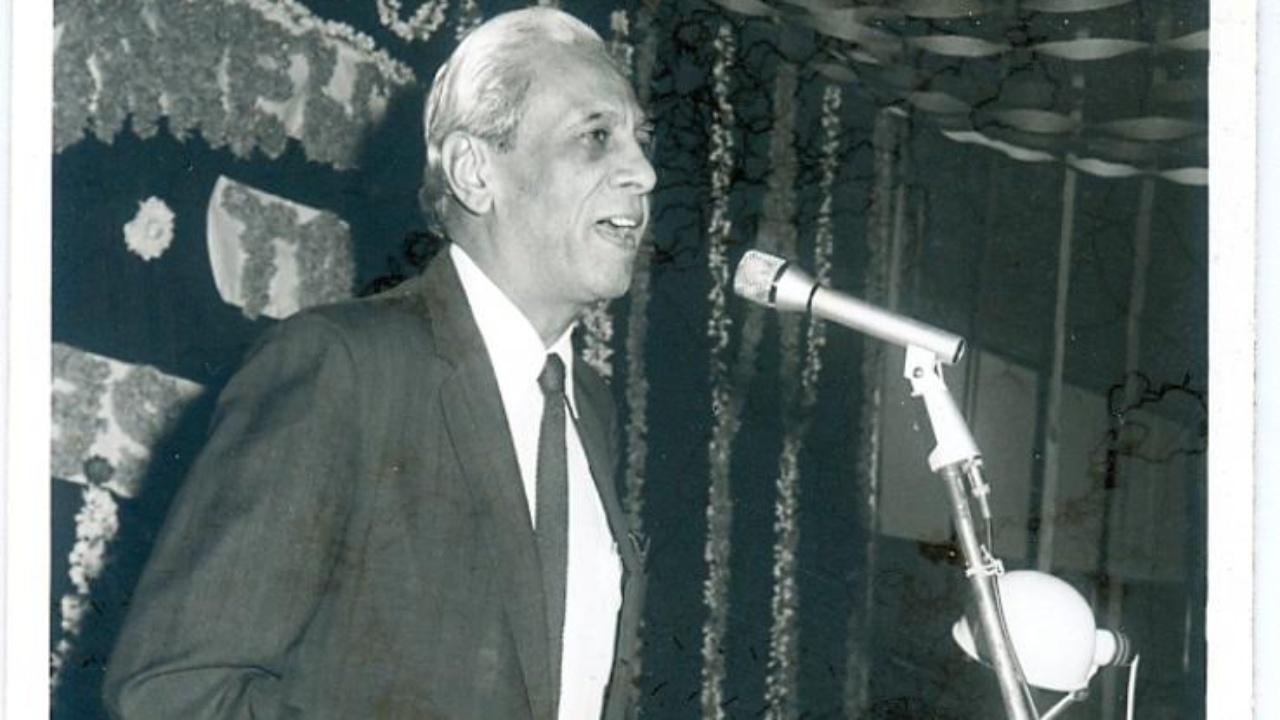
Today marks the birth anniversary of Satish Dhawan, one of India’s most revered space scientists and a visionary leader who laid the foundation for the country’s space ambitions. Born on September 25, 1920, Dhawan revolutionized India’s space research through his pioneering work at ISRO, where he succeeded Vikram Sarabhai and mentored A.P.J. Abdul Kalam. Under his leadership, India saw its first satellite launch from indigenous soil, igniting a journey of self-reliance in space technology. His commitment to scientific excellence and nation-building remains an inspiration, making his birth anniversary a moment to reflect on his enduring legacy in Indian space science.
1. Who Was Satish Dhawan, and Why Is He So Important?
Satish Dhawan was an aerospace engineer, educator, and former chairman of the Indian Space Research Organisation (ISRO). He succeeded Vikram Sarabhai in 1972 and took ISRO to new heights. Known for his humility and intellect, Dhawan’s leadership style combined technical excellence with visionary policymaking. His tenure is credited with decentralizing ISRO, promoting autonomy, and laying the groundwork for future missions like Chandrayaan and Mangalyaan. Despite his contributions, he stayed out of the limelight, focusing on institution-building and nurturing young scientists.
2. How Did He Steer ISRO Through Its Most Difficult Times?
After Sarabhai’s sudden death, ISRO was at a crossroads. Dhawan took charge during political uncertainty and limited resources. His leadership during the 1979 SLV-3 failure, India’s first satellite launch vehicle, was iconic. Instead of blaming his team, he publicly accepted responsibility, and when the mission succeeded the following year, he gave full credit to them. This culture of accountability and resilience became ISRO’s trademark. His calm and principled approach created a solid foundation for future breakthroughs.
3. What Were His Most Notable Contributions to Space Science?
Under Dhawan’s leadership, India launched its first communication satellite, APPLE (Ariane Passenger Payload Experiment,) and developed SLV-3, the precursor to today’s PSLV. He initiated satellite applications for rural development, such as the Satellite Instructional Television Experiment (SITE). These efforts showed how space technology could solve India’s social and economic problems. He also championed academic research, integrating ISRO with educational institutions like IISc, thus bridging the gap between research and application.
4. Why Is He Considered a Pioneer in Aerospace Engineering?
Before ISRO, Dhawan made significant contributions to boundary layer theory and fluid dynamics. He modernized the Indian Institute of Science’s aerospace department, turning it into a world-class center for aeronautics. His research on turbulence and high-speed flows remains influential in aerospace studies. He believed India must master technology, not just use it. This engineering mindset laid the technical backbone for ISRO’s indigenous capabilities.
5. Did Satish Dhawan Work with Political Leaders or Corporates?
No. Dhawan kept a principled distance from political interference. He focused on scientific autonomy and institutional integrity. He wasn’t aligned with any political group or corporate entity, which gave him the freedom to make decisions based on national interest, not personal gain. His rapport with Prime Ministers like Indira Gandhi was strictly professional. This ensured that ISRO remained a scientific body rather than a bureaucratic institution.
6. Were There Any Controversies or Scandals Linked to Him?
None, since Satish Dhawan maintained an impeccable record throughout his life. There were no scandals, controversies, or accusations of corruption linked to him. He led a disciplined, ethical life that prioritized national service. His quiet integrity was one of his most admired traits.
7. How Did He Mentor Future Leaders Like A.P.J. Abdul Kalam?
Dhawan was instrumental in nurturing young talent. A.P.J. Abdul Kalam, India’s Missile Man and later President, often credited Dhawan for his mentorship and leadership example. Dhawan gave Kalam the freedom to lead missions, supported him during failures, and taught him the importance of humility and service. His approach created a generation of scientists who were technically sound and ethically grounded.
ALSO READ: “The 2009 Oceansat-2 Launch That Put India on the Global Space Map”
8. What Was His Role in Making ISRO Self-Reliant?
Dhawan insisted on indigenous development rather than dependency on foreign technologies. He encouraged Indian scientists to innovate locally, which led to the design and execution of technologies like SLV, INSAT, and IRS. His emphasis on in-house capability made ISRO one of the most cost-effective and self-reliant space agencies in the world.
9. Did He Collaborate with NGOs or Educational Initiatives?
While not known for working directly with NGOs, Dhawan’s work greatly influenced public initiatives. Projects like SITE (Satellite Instructional Television Experiment) and INSAT helped NGOs and rural outreach programs deliver educational and health services. As Director of IISc, he promoted collaborative research that indirectly benefited civil society.
10. How Is Satish Dhawan Remembered Today?
Satish Dhawan’s legacy is honored through institutions like the Satish Dhawan Space Centre in Sriharikota. His name is associated with excellence, ethics, and scientific nationalism. However, he remains under-recognized in popular culture compared to other Indian scientists. His work continues to inspire space scientists, educators, and policymakers alike.
11. Are There Official Records and Biographies on Him?
Yes. ISRO’s official website and several government archives document Dhawan’s contributions. Books such as “Reaching for the Stars” and interviews with ISRO scientists offer valuable insights. Media outlets like The Hindu, India Today, and Hindustan Times have published detailed retrospectives on his life.
12. How Did the Global Scientific Community View Him?
Internationally, Dhawan was respected as a scientist and academic. He held fellowships in several global academies and received honors like the Padma Vibhushan. His quiet leadership and technical rigor earned praise from space agencies like NASA and ESA, who viewed India as an emerging space power under his guidance.
13. What Was His Leadership Style?
Collaborative and empowering. Dhawan believed in decentralization, delegating authority to centers like SAC, VSSC, and NRSC. He allowed scientists to take initiative while offering support. His decision to face media after failures, instead of blaming others, created a culture of accountability rare in government institutions.
14. What Can Today’s Leaders Learn from Satish Dhawan?
Dhawan’s life teaches the power of ethical leadership, vision-driven strategy, and humility. In an era where headlines matter more than hard work, his legacy is a reminder that true change often comes quietly, with persistence, patience, and principle.
15. Why Is His Story More Relevant Than Ever Today?
As India aims for space exploration milestones like Gaganyaan and Chandrayaan-4, Dhawan’s vision of inclusive, ethical, and indigenous science is more relevant than ever. In an age of commercialization and geopolitical competition in space, his human-centric approach offers a blueprint for balanced and responsible scientific progress.
.png)