Pakistan’s Grooming of Jaish-e-Mohammed: From 2001 Fidayeen Strikes to 2025 Women’s Wing

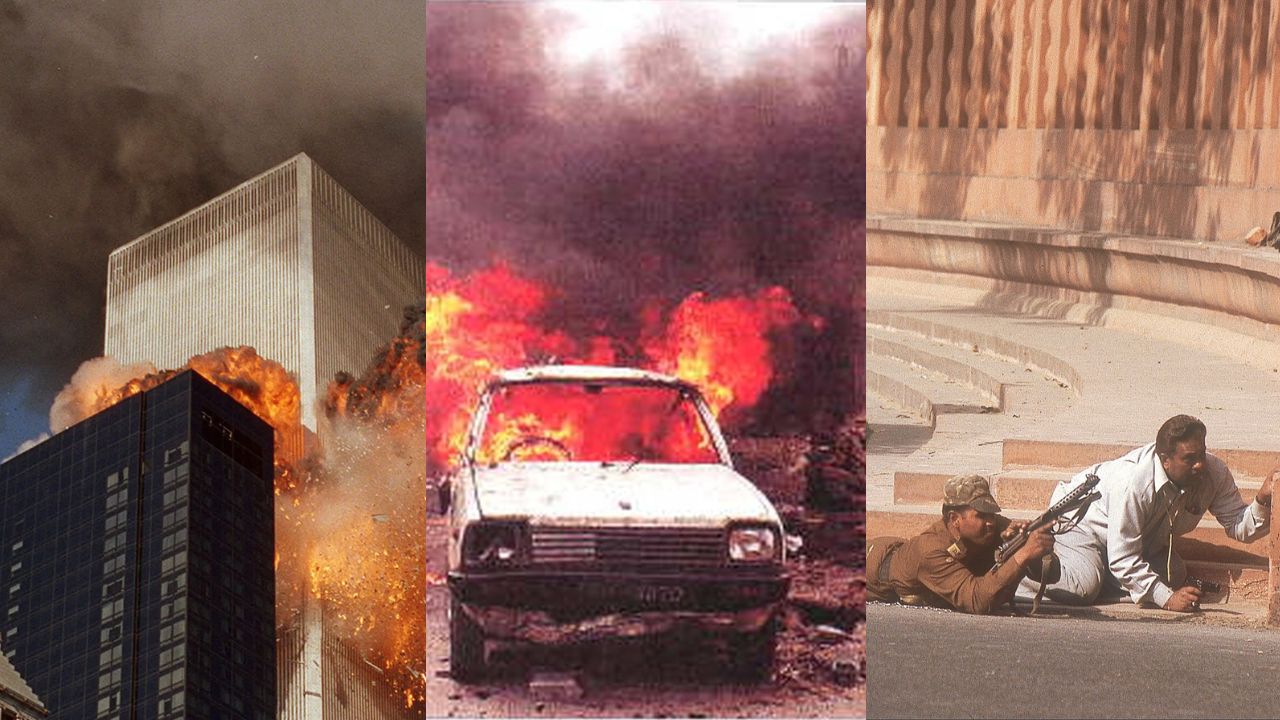
In October 2001—just three weeks after the 9/11 attacks in the United States and months before the Indian Parliament assault—the Jammu and Kashmir State Legislative Assembly in Srinagar became the site of a major terror attack orchestrated by the Pakistan-based Jaish-e-Mohammed (JeM). The world stood stunned as, within just a matter of months, three devastating terror strikes unfolded in chilling sequence.
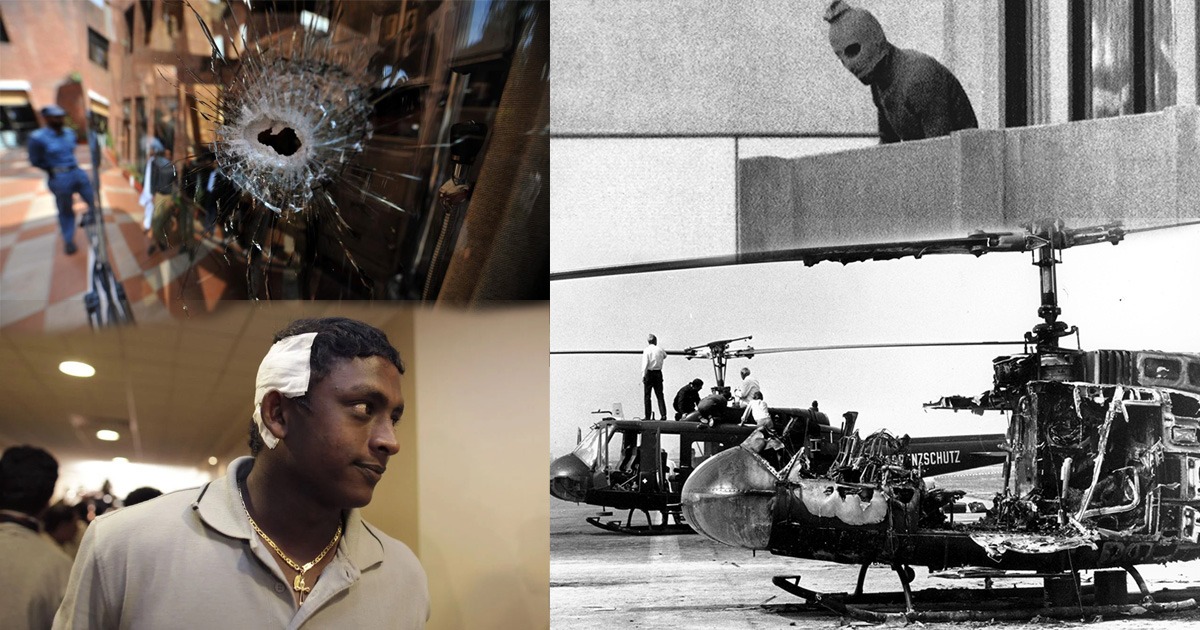
Jammu & Kashmir came to a halt when, on October 1st, at around 2 pm, a Tata Sumo vehicle packed with explosives rammed into the main gate of the Srinagar Assembly complex, triggering a massive explosion. What followed was two more armed terrorists storming inside the assembly, and opening indiscriminate fire on security personnel and staff. The fierce gun battle lasted for hours, leaving 38 people dead, including police personnel, assembly staff, and a schoolgirl, and injuring over 60.
This was one of the earliest large-scale fidayeen (suicide) attacks in Kashmir, marking a shift from traditional guerrilla warfare to suicide missions that prioritized spectacle, fear, and mass casualties.

Srinagar Attack | Image Credit: Twitter/@Priyanshi50
The Fidayeen Doctrine
The word fidayeen comes from Arabic, meaning “those who sacrifice themselves.” Hence, in such attacks, terrorists aim at inflicting maximum damage even if it results in their death. During the Srinagar Assembly attack, for instance, an attacker detonated the vehicle bomb, while others engaged in a shootout until killed. These tactics mirrored the suicidal attack or the fidayeen tactic seen in the 9/11 terror attack, where Al-Qaeda hijackers turned passenger jets into weapons, killing nearly 3,000 in the U.S.

9/11 attacks orchestrated by Al Qaeda terrorists | Image Credit: PTI
Just months after the Srinagar Assembly attack, JeM terrorists once again replicated the fidayeen attack tactic on December 13, 2001. JeM and Lashkar-e-Taiba terrorists attempted to storm India’s Parliament, the very seat of Indian democracy.
In all three attacks, the usage of vehicles as suicide bombers is symbolic, illustrating meticulous planning with suicidal commitment, designed to terrify nations and paralyze political systems.
When Diplomacy Collided With Terror
Ironically, these attacks came just months after a moment of rare diplomatic optimism. In July 2001, Prime Minister Atal Bihari Vajpayee and Pakistan’s Pervez Musharraf met in Agra to attempt a breakthrough on Kashmir.
But even as Vajpayee reached out in peace, Musharraf betrayed. He publicly equated terrorists with “freedom fighters” and insisted that progress on all issues be hinged on resolving Kashmir, without addressing cross-border terrorism. The talks collapsed.
Barely two months later, the Srinagar Assembly attack made clear what diplomacy had failed to do: Pakistan was unwilling to control its terror proxies. By year’s end, the attack on the Indian Parliament left no doubt: Jaish-e-Mohammed had become Islamabad’s sharpest weapon against India.
JeM’s War on India
From the 2001 Srinagar bombing and the Parliament attack to the Pathankot and Uri strikes in 2016 and the Pulwama suicide bombing in 2019, JeM has repeatedly targeted civic institutions, security forces, and civilians. Then came the 2025 Pahalgam massacre, where 26 innocent civilians, who came to spend the holidays, were killed in a deliberate attack to continue that pattern of cruelty. Each repeated attack, despite being years apart, was meant to destabilize regional peace, derail diplomacy, and provoke India.
The Curious Link Between Al Qaeda and JeM
What needs to be highlighted here is the fact that what the Al Qaeda terrorists did in the 9/11 attacks was replicated by the JeM terrorists in the Srinagar Assembly attack and the Indian Parliament attack. Why? Only because JeM did not spring up in a vacuum. Its founder, Masood Azhar, received material, ideological, and logistical backing from elements tied to Al-Qaeda.
Training camps, safe havens, and ideological mentorship connected JeM to the broader jihadi ecosystem. That Al Qaeda-JeM network amplified the latter’s lethality and provided it with techniques — including the fidayeen doctrine — that it then applied against India. These ties also made JeM not merely a criminal gang but part of an Islamist extremist movement.
JeM After Operation Sindoor
However, India soon stalled JeM. India’s Operation Sindoor in May 2025 struck hard at JeM’s infrastructure: the group’s Markaz in Bahawalpur and several training hubs were damaged or destroyed; leadership was disrupted; and recruitment pipelines were threatened—everything in response to JeM’s brutal terror attacks against India over the years.
Out of sheer desperation, JeM attempted to reorganize its operations and adopted new methods of fundraising, propaganda, and recruitment. The most alarming outcome was the formation of JeM’s first-ever women’s wing, “Jamaat-ul-Mominaat”, led by Masood Azhar’s sister Sadiya Azhar. JeM has now moved to recruiting wives of commanders and vulnerable women from urban and rural Pakistani locales, reportedly preparing them for support roles and, increasingly, for combat and suicide missions.
JeM’s tactics of suicide bombings, targeted massacres, and deliberate attacks on civilian residences were designed to terrorize and to erode the moral fabric of societies. However, India shook its very core in 2025 through Operation Sindoor. Thus, now, the group is forced to recruit female members. Yet, the so-called evolution does not humanize it; instead, it only magnifies how JeM corrupts lives and communities for violent ends.
.png)