“Punjab Separatist” Idea Was Born Overseas: Why West Became Home to Movement That Never Succeeded in India

On December 23, 2020, Auckland-based radio host Harnek Singh, known for speaking out against Punjab separatist ideology, was violently ambushed in his driveway by a group of religious extremists. The attack left him with severe injuries. In December 2023, a New Zealand court convicted three extremists for the attempted murder: Sarvjeet Sidhu (27), who pleaded guilty to attempted murder; Sukhpreet Singh (44), found guilty as an accessory; and a 48-year-old Auckland man, identified as the planner of the attack, motivated by resentment toward Harnek Singh.
This is one of the few cases of violence in New Zealand linked to Punjab Separatism. Of late, the Sikh for Justice (SFJ), a US-based group that campaigns for a separate state for Punjab, organized one such referendum in Auckland’s Aotea Square in 2024. Even though these referendums are not legally binding. This brings us back to the main question: How did the Punjab Separatism Movement spread to New Zealand and other Western Nations? In the article, we trace how the name “Khalistan” first appeared not in India, or the UK, or Canada, but in New York. We bring you the origin of the Punjab Separatism in the year 1971.
An Ambition for a Separate Nation: Not in Punjab, But in New York
On a crisp autumn morning in October 1971, the bustling newsroom of The New York Times carried an advertisement that few Americans understood. It was placed by a little-known Indian politician living abroad, Jagjit Singh Chohan, a former Finance Minister of Punjab. After he lost local elections in India, he had the idea to post an advertisement in the New York Times, calling for the creation of a separate Sikh nation called “Khalistan.”
After he left India, Chauhan travelled to London in 1971, with an objective to reshape global sikh politics. In order to get the attention of the West, he posted an ad in the epicentre of global media, New York. After the advertisement in the NYT, he also called for a demonstration in front of United Nations. But, a letter revealed that not many people turned up.
He also assumed the role of the President of “Khalistan” and he printed letterheads and symbolic passports, postage stamps, and currency too (the Khalistani dollar) for his ‘government’. Through these symbolic acts he tried to come out with more legitimacy for his separatist ideas. The movement never took off.
The Idea That Has Become Just a Symbolic One
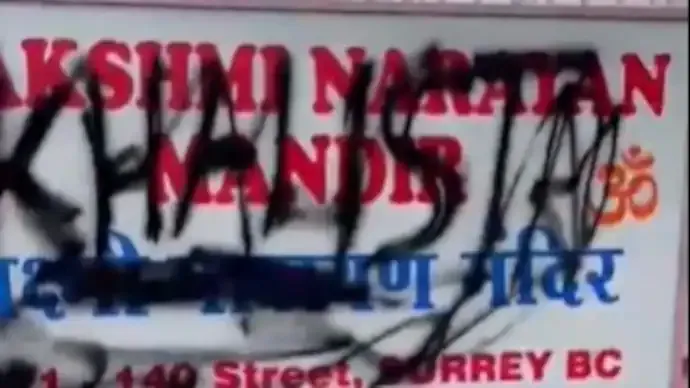
From 1970s till now, as we trace the development of this separatist ideas in the Western world, we can just categorise them into 3 different insignificant parts. One is the emergence of some organisations in Canada and UK like the SFJ, which threaten Indian Diplomats and leaders. Secondly, these organisations conduct internationally non-binding referendums across Western Nations to keep their symbolic aspirations to break India and create a separate Punjab Nation. Thirdly, these outfits also occasionally attack Indian temples and diplomatic missions abroad in Canada, UK, Australia, and New Zealand.
The attempt to attack Harnek Singh in New Zealand revealed the most dangerous edge of this symbolism — when an idea with no base in Punjab morphs into extremist action overseas. Such a separatist ideology is now also seen as fading in the corridors of Western democracies.
.png)
.jpg)